Last updated: October 27, 2026
Table of contents
- Best Laptops for Fusion 360: Quick Picks
- What I Learned Before Picking Anything
- How I Evaluated These Laptops
- Fusion 360 Laptop Requirements
- The Part Other Guides Skip: Match Your Fusion Workload to the Right Hardware
- Best Laptops for Fusion 360 in 2026: 5 Picks Matched to How You Actually Use Fusion
- 1. Apple MacBook Pro 16 (M5 Pro / M5 Max) : Best Laptop for Fusion 360 Overall
- 2. Dell Pro Max 16 Plus : Best Windows Workstation for Fusion 360
- 3. Lenovo ThinkPad P1 Gen 9: Best Portable Certified Workstation for Fusion
- 4. ASUS ROG Zephyrus G16 (2026) : Best All-Rounder for Hobbyists, Makers and Creators
- 5. Acer Predator Helios Neo 16S AI (2026) : Most CPU Speed for the Money
- Head-to-Head: Published Benchmark Results
- Display, Battery, Storage and Thermals
- Specs Comparison
- Fusion on Mac vs. Windows: The Gotchas Nobody Warns You About
- The Graphics Settings I’d Use on Each Laptop
- My 10-Minute Fusion Test Before You Commit
- What Each Laptop Really Costs Over Three Years
- Which One Should You Buy? A Quick Decision Path
- Buying Guide: How to Choose a Laptop for Fusion 360
- Frequently Asked Questions
- My Final Verdict
- Sources
Here’s something that surprises almost everyone I explain it to. A $5,000 workstation with a 24GB graphics card can feel slower in Fusion than a laptop that costs half as much and has no dedicated GPU at all.
It sounds backwards, I know. But if you’ve ever changed one dimension near the top of a long design timeline and then sat there watching Fusion recompute feature after feature, you’ve already met the reason. Most of what makes Fusion feel fast or sluggish runs on a single CPU core. Autodesk says so in its own system requirements. The giant GPU mostly sits there waiting.
The numbers back it up. In Notebookcheck’s testing, Apple’s M5 Max scored about 200 points in Cinebench 2024’s single-core test. Dell’s beastly Pro Max 16 Plus, with its 24-core Intel chip and 24GB RTX PRO 5000 graphics card, scored 126. That’s a gap of nearly 60% on exactly the kind of work you do all day: sketching, constraining, editing features and rebuilding history.
Now flip it around. Generate a multi-setup CAM toolpath, run a local stress simulation, or render a product shot, and the Dell’s extra cores and VRAM suddenly earn every dollar. Same software, opposite winner.
That’s why I don’t think there’s one “best laptop for Fusion 360.” There’s a best laptop for your Fusion. So instead of ranking five machines by spec sheet, I matched each one to the kind of Fusion work it does best. Every number in this guide comes from a named, independent lab, and I tell you when a number is a manufacturer claim instead.
My short answer: For most people, the 16-inch MacBook Pro with M5 Pro is the best laptop for Fusion 360 right now. If you need Windows and do heavy professional work, get the Dell Pro Max 16 Plus. If you carry your machine every day and need certified hardware, the Lenovo ThinkPad P1 Gen 9 is the one. Hobbyists who also game or render in Blender will love the ASUS ROG Zephyrus G16 (2026). And if you want the most Windows CPU speed for your money, look at the Acer Predator Helios Neo 16S AI (2026).
Best Laptops for Fusion 360: Quick Picks
| Award | Laptop | Why it wins for Fusion | Starting price (US) |
|---|---|---|---|
| Best overall | Apple MacBook Pro 16 (M5 Pro / M5 Max) | Fastest single-core speed in any laptop, up to 128GB unified memory, 18+ hours of battery | $2,699 (M5 Pro), $3,899 (M5 Max) |
| Best Windows workstation | Dell Pro Max 16 Plus | 24-core HX CPU, certified RTX PRO 5000 with 24GB, up to 128GB removable RAM | About $3,700 |
| Best portable certified workstation | Lenovo ThinkPad P1 Gen 9 | Newest Panther Lake chip and certified RTX PRO 2000 in a 3.9lb body | $3,734 |
| Best all-rounder for hobbyists and creators | ASUS ROG Zephyrus G16 (2026) | Up to RTX 5080 16GB in a 4.2lb aluminum chassis with 14-17 hours of battery | About $3,389 (RTX 5080) |
| Most CPU for the money | Acer Predator Helios Neo 16S AI (2026) | Intel’s fastest mobile chip, the Core Ultra 9 290HX Plus | $3,299 (as reviewed) |
Fusion 360 laptop requirements in one line: Autodesk now recommends an x86-64 CPU with 8+ performance cores and 16+ threads, 32GB+ of RAM, and a dedicated GPU with 8GB+ of memory on Windows 11 23H2 or newer. On a Mac, it recommends an M1 Max or newer with 16GB+ on macOS 15.7 Sequoia or macOS 26 Tahoe.
What I Learned Before Picking Anything
- Fusion is two programs in one. The interface and most modeling commands lean on single-core speed. CAM toolpaths and simulation are multi-threaded and scale with core count. Your workload decides which spec matters.
- Apple silicon is a first-class Fusion platform. Fusion runs natively on M-series Macs. A handful of commands still ask for Rosetta 2 while they move over.
- Windows on Arm isn’t ready. Autodesk says Fusion can run on Arm-based Windows laptops through Prism emulation, but it hasn’t finished certifying that. I left every Snapdragon and Nvidia RTX Spark laptop off this list for that reason.
- Certified GPUs matter if Fusion pays your bills. Autodesk recommends certified graphics (Nvidia RTX PRO, AMD Radeon Pro, Intel Arc Pro) for professional use. It calls GeForce cards “generally compatible” for hobbyists.
- Almost no laptop meets Autodesk’s recommended CPU line to the letter. “8+ performance cores” reads like a desktop spec. Of my five picks, only the Intel HX chips in the Dell and Acer have eight true P-cores.
How I Evaluated These Laptops
I want to be upfront about this: the benchmark numbers here come from published reviews by independent labs, not from a bench in my office. I name the outlet beside every figure, because results from different labs aren’t perfectly comparable. Each lab uses its own test versions, power modes and settings.
Here’s the process I followed:
- I started with Autodesk’s official requirements, updated September 30, 2026, and checked every laptop against the “Recommended” column for Windows or macOS.
- I confirmed each pick is the newest generation on sale as of late October 2026: Apple M5 Pro and M5 Max, Intel Core Ultra Series 3 “Panther Lake,” Intel’s Arrow Lake-HX Plus refresh, and Nvidia’s Blackwell RTX 50-series and RTX PRO GPUs.
- I gathered measured data in the same order for every laptop: CPU (Cinebench, Geekbench), GPU (3DMark), display (brightness, color gamut, Delta E), battery, SSD speed and thermals.
- I weighted results the way Fusion uses hardware. Single-core scores counted most for modeling. Multi-core and sustained clocks counted for CAM and simulation. VRAM and GPU class counted for rendering and big viewports. Battery, weight and ports counted for real life.
- I matched each laptop to a type of Fusion user instead of crowning one universal winner.
| Laptop | Main independent sources |
|---|---|
| MacBook Pro 16 (M5 Pro / M5 Max) | Notebookcheck, Engadget, AppleInsider, Tom’s Guide, Tom’s Hardware |
| Dell Pro Max 16 Plus | Notebookcheck, StorageReview, ITPro, EngineeringLaptops |
| Lenovo ThinkPad P1 Gen 9 | StorageReview (review published October 26, 2026), Lenovo PSREF |
| ASUS ROG Zephyrus G16 (2026) | Notebookcheck, Ultrabookreview, LaptopMedia, Tom’s Guide, 91mobiles |
| Acer Predator Helios Neo 16S AI (2026) | PC Gamer, Notebookcheck |
One honest limitation: no lab has published a Fusion-specific timing test for these exact models yet. So I lean on the CPU and GPU tests that best mirror how Fusion behaves, and I explain the connection for each one.
Fusion 360 Laptop Requirements
Autodesk’s current spec sheet is useful, but it doesn’t tell you what to actually buy. Here’s each line with my take beside it.
| Component | Autodesk minimum (Windows) | Autodesk recommended (Windows) | What I’d actually buy |
|---|---|---|---|
| Operating system | Windows 11 23H2 (Build 22631+) | Same | Windows 11 Pro, current build |
| CPU | x86-64, 2 P-cores / 4 threads, 3GHz+ turbo | x86-64, 8+ P-cores / 16+ threads, 3GHz+ base | The highest single-core score you can afford |
| RAM | 8GB | 32GB+ | 32GB for hobby work, 64GB for big assemblies and simulation |
| GPU | 1GB, integrated OK, DirectX 11 | 8GB+ dedicated, certified for pro use | RTX PRO Blackwell for pros, GeForce RTX 50-series (8-16GB) for hobbyists |
| Display | 1366 x 768 | 4K at 60Hz with 200% scaling | 16-inch, 2.5K to 4K, color-accurate |
| Storage | 8.5GB | 15GB+ on an SSD | 1TB NVMe at minimum |
| Internet | 5 Mbps down / 1 Mbps up | 25+ Mbps down / 5 Mbps up | Wi-Fi 7 helps, since Fusion lives in the cloud |
On a Mac, Autodesk’s minimum is macOS 14 Sonoma with an M1 and 4GB of RAM. The recommendation is macOS 15.7 Sequoia or macOS 26 Tahoe, an M1 Max or newer, and 16GB+ of RAM.
Two details in Autodesk’s document matter more than everything else. First, it says outright that toolpaths and simulation scale with core count, while the interface and many modeling operations scale with single-threaded clock speed. Second, Arm-based Windows machines can run Fusion through emulation, but that setup hasn’t completed certification.
The Part Other Guides Skip: Match Your Fusion Workload to the Right Hardware
Most “best laptop for Fusion 360” lists treat every user the same. But a hobbyist sketching 3D-printer brackets and an engineer optimizing a 600-part assembly need very different machines. This is the table I wish someone had shown me years ago.
| What you do in Fusion | What slows it down | Spec that matters most | Spec that barely matters | My pick for it |
|---|---|---|---|---|
| Sketching, constraints, timeline rebuilds | Single-core CPU | High single-core boost clock, fast memory | Core count, GPU size | MacBook Pro 16 |
| Large assemblies, joints, long history | Single-core CPU, RAM, viewport GPU | 64GB RAM, strong single-core, 8GB+ VRAM | Extreme multi-core | MacBook Pro 16 (M5 Max), Dell Pro Max 16 Plus |
| Smooth 4K viewport and canvas | GPU and driver quality | Dedicated GPU, certified driver | CPU cores | Dell Pro Max 16 Plus, ThinkPad P1 Gen 9 |
| Local rendering | CPU and GPU throughput | Many cores, big GPU, strong cooling | Battery | Dell Pro Max 16 Plus, MacBook Pro 16 (M5 Max) |
| CAM toolpath generation | Multi-core CPU | High core count, sustained clocks | GPU | Dell Pro Max 16 Plus, Acer Helios Neo 16S AI |
| Local simulation | Multi-core CPU and RAM | Cores, 64GB+ RAM | Display | Dell Pro Max 16 Plus |
| Generative design, cloud simulation | Autodesk’s servers and your cloud credits | Fast, stable internet | Almost everything local | Any of the five |
| Electronics (PCB) and drawings | Single-core CPU, screen space | Sharp 16-inch display, good keyboard | GPU | ThinkPad P1 Gen 9, MacBook Pro 16 |
| Learning CAD, STL prep for 3D printing | Barely anything | 16GB+ RAM, any recent GPU | Workstation GPU | Zephyrus G16 (RTX 5070), base MacBook Pro 16 |
A money-saving note on rendering: Fusion can render locally on your own hardware or in the cloud. Cloud rendering uses tokens from your Autodesk account. If you only render now and then, cloud tokens can stand in for a big GPU. If you render daily, local hardware usually pays for itself.
And on generative design: Autodesk’s support documentation explains that a generative study won’t finish when the account doesn’t have enough cloud credits. It runs on Autodesk’s servers no matter what laptop you own. Please don’t buy a $6,000 machine just for generative design.
Best Laptops for Fusion 360 in 2026: 5 Picks Matched to How You Actually Use Fusion
1. Apple MacBook Pro 16 (M5 Pro / M5 Max): Best Laptop for Fusion 360 Overall
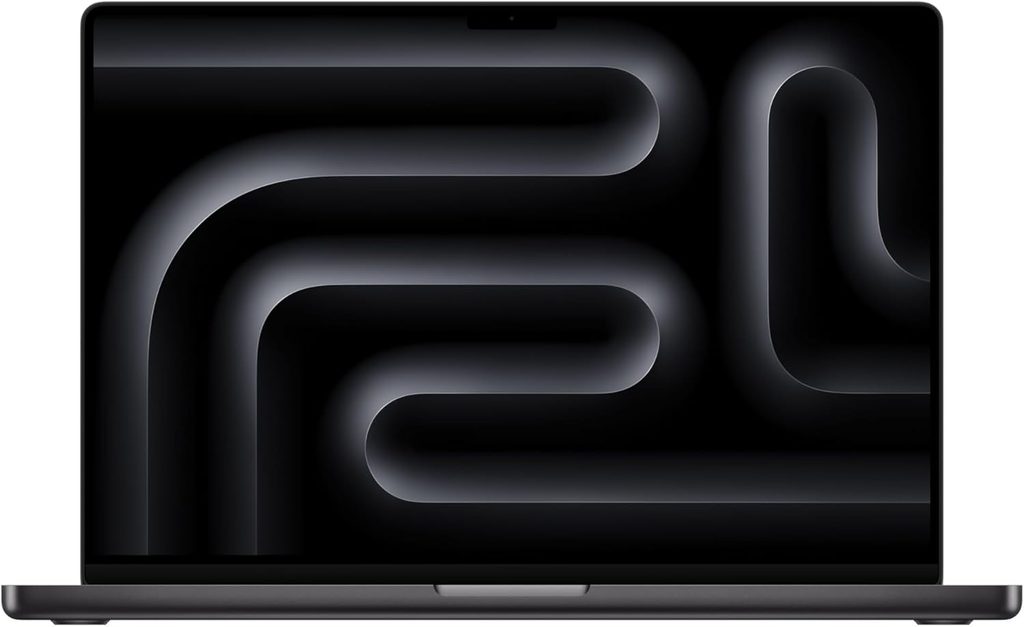
If you asked me to pick one laptop for Fusion without knowing anything else about you, this is it. Nothing else in a laptop comes close to the M5’s single-core speed, and that’s what Fusion leans on most.
Key specs
- CPU: Apple M5 Pro (up to 18-core) or M5 Max (18-core: 6 “super” cores + 12 performance cores)
- GPU: Integrated, up to 40 cores on the M5 Max
- RAM: Unified memory, up to 128GB on the M5 Max with 614GB/s of bandwidth
- Storage: 1TB standard on M5 Pro, 2TB on M5 Max, up to 8TB
- Display: 16.2-inch Liquid Retina XDR mini-LED, 120Hz ProMotion, optional nano-texture
- Battery: 99.6Wh
- Weight: 4.73lb (2.14kg) for the M5 Max per Notebookcheck; Tom’s Guide lists the M5 Pro at 4.7lb
- Ports: 3x Thunderbolt 5, HDMI, SDXC, MagSafe 3, headphone jack; Wi-Fi 7 and Bluetooth 6
- Price: $2,699 (M5 Pro) and $3,899 (M5 Max) to start
What the labs measured
- Geekbench 6: 4,338 single / 29,261 multi (Engadget, M5 Max); 4,306 / 28,586 (Tom’s Guide, M5 Pro)
- Cinebench 2024: about 200 single / 2,490 multi (Notebookcheck, M5 Max)
- 3DMark Steel Nomad: 4,386 (Notebookcheck, M5 Max)
- Display: 710 nits max SDR, 100% sRGB, 99.3% Display P3, Delta E 1.1 (Notebookcheck, M5 Max)
- Battery: 18.5 hours in Notebookcheck’s Wi-Fi test at 150 nits; 21 hours 10 minutes in Tom’s Guide’s web test (M5 Pro)
- SSD: 12,574MB/s read and 12,122MB/s write (AppleInsider, 2TB M5 Max); about 13GB/s read in Engadget’s ATTO test
- Thermals: Notebookcheck found the cooling sustains about 70W and usually stays very quiet. Under full combined CPU and GPU load, the 140W charger couldn’t keep up and the battery drained about 12% per hour.
Pros
- The highest single-core performance in this guide by a wide margin
- Up to 128GB of unified memory the GPU can draw on, so huge assemblies have room
- Battery life no Windows workstation gets near
- Accurate, bright display, and the best speakers and trackpad in the class
Cons
- No certified-GPU route like RTX PRO, and no CUDA
- RAM and storage are soldered, so you buy for year three on day one
- Upgrades are pricey (Tom’s Hardware lists +$1,000 to go from 48GB to 128GB on the 14-inch M5 Max)
- The included charger can’t fully sustain maximum M5 Max load
Why I’d buy it for Fusion
Picture a 300-feature timeline where you tweak a sketch near the top. Every downstream feature has to recompute, mostly one after another, on one core. That’s exactly where the M5 pulls ahead. Autodesk recommends an “M1 Max or newer” on macOS, and the M5 Pro clears that by several generations. The M5 Max adds a 40-core GPU that makes local rendering pleasant.
My configuration advice: M5 Pro with 48GB if you mostly model and run CAM. M5 Max with 64GB or more if you render locally or work on very large assemblies.
A quick timing note: Bloomberg’s Mark Gurman reported, as covered by MacRumors on October 25, that Apple plans to show 16-inch MacBook Pros with touch-enabled OLED screens on October 28, using the same M5 Pro and M5 Max chips. Since the chips stay the same, everything I’ve said about Fusion performance still holds. If you’re buying this week, though, waiting a day or two to see pricing costs you nothing.
2. Dell Pro Max 16 Plus: Best Windows Workstation for Fusion 360
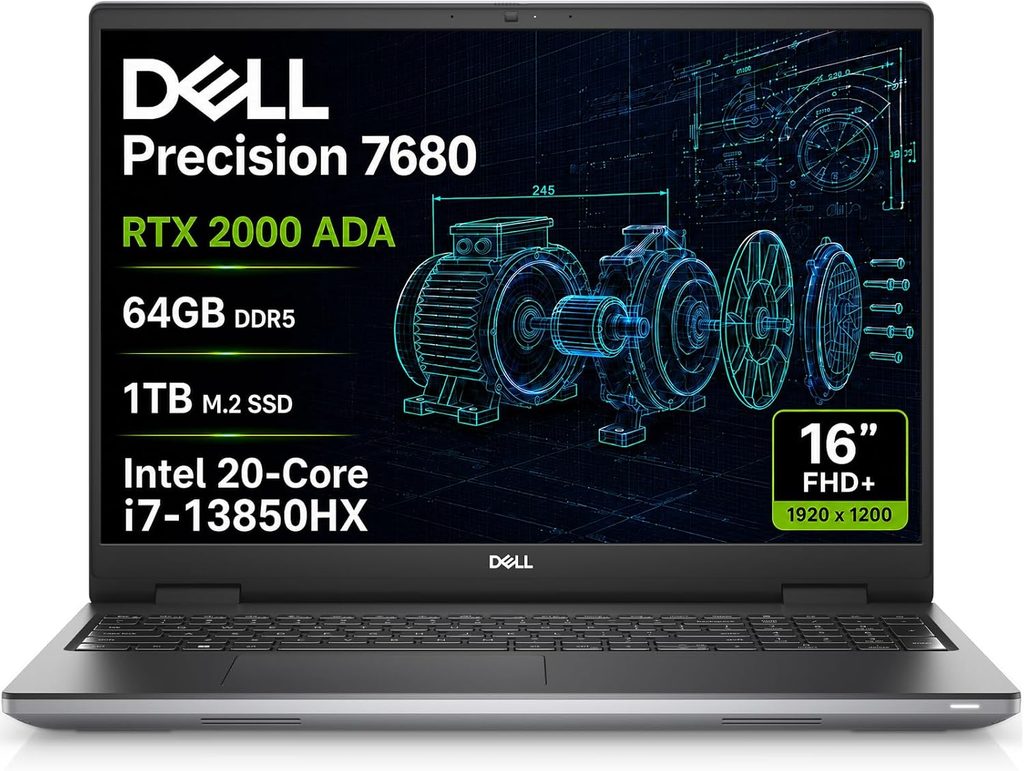
This is the laptop that comes closest to Autodesk’s “Recommended” column word for word. It has eight true performance cores, 24 threads, room for 128GB of RAM and a certified 24GB GPU. If Fusion pays your mortgage and you live in big assemblies, renders and CAM, this is the Windows machine I’d want.
Key specs
- CPU: Up to Intel Core Ultra 9 285HX (24 cores: 8P + 16E, up to 5.5GHz)
- GPU: Up to Nvidia RTX PRO 5000 Blackwell with 24GB GDDR7 (rated up to 175W), on a replaceable module; RTX PRO 1000 to 4000 also offered
- RAM: Up to 128GB CAMM2 DDR5-6400, removable
- Storage: Up to three M.2 Gen 5 slots per StorageReview, up to 12TB
- Display: 16-inch 3840 x 2400 120Hz OLED touch (top option), plus 1920 x 1200 IPS options
- Battery: 96Wh
- Weight: 6.27lb (2.85kg) per Notebookcheck; the 280W adapter adds another 755g
- Ports: 2x Thunderbolt 5, Thunderbolt 4, 2x USB-A, HDMI 2.1, 2.5GbE Ethernet, SD reader; the USB-C ports are modular and replaceable
- Price: From about $3,700 (Notebookcheck)
What the labs measured
- Cinebench R23: 2,057 single / 35,165 multi (Notebookcheck data, compiled by EngineeringLaptops)
- Cinebench 2024: 126.3 single / 1,907 multi (same source)
- Geekbench 6: 3,032 single / 20,978 multi (StorageReview)
- Sustained CPU: Cinebench R15 slipped about 10% over a long loop, from 5,427 to a 4,879 average
- GPU: Notebookcheck saw the RTX PRO 5000 settle around 125W in sustained work despite its 175W rating; ITPro measured 160 to 165W after a firmware update
- Display (4K OLED): 556.8 nits SDR, about 1,066 nits HDR, 100% sRGB, 97.3% Display P3, Delta E 2.42 out of the box and 0.7 after calibration (Notebookcheck)
- SSD (CrystalDiskMark): 11,918MB/s sequential read and 6,118MB/s write (EngineeringLaptops)
- Battery: 6 hours 21 minutes (StorageReview, RTX PRO 5000 build)
- Thermals: The CPU reached 95 to 105°C under stress and system power peaked near 280W (Notebookcheck)
Pros
- The only pick with a certified 24GB workstation GPU
- Real upgradability: removable CAMM2 RAM, a replaceable GPU module and swappable USB-C ports
- 24 cores for CAM toolpaths and local simulation
- Gorgeous 4K 120Hz OLED and a full workstation port set, including Ethernet
- Three-year warranty standard, per Notebookcheck
Cons
- Heavy and power-hungry, with modest battery life
- Runs hot under long, heavy loads
- The GPU can’t hold its full rated wattage in this chassis
- No ECC memory option
- Single-core speed trails the Mac, so pure sketching won’t feel faster
Why I’d buy it for Fusion
Everything that scales with cores or VRAM flies here: CAM toolpaths across multiple setups, local stress studies, photoreal renders, and dense assemblies at 4K. It still uses Intel’s Arrow Lake-HX chip rather than the newer 290HX Plus, but Dell hasn’t replaced this model, and StorageReview still ranks it as its best overall mobile workstation for 2026.
My configuration advice: Core Ultra 9 285HX, RTX PRO 3000 (12GB) or RTX PRO 5000 (24GB), and 64GB of RAM. Choose the 1920 x 1200 IPS panel over the OLED if battery life matters to you.
3. Lenovo ThinkPad P1 Gen 9: Best Portable Certified Workstation for Fusion
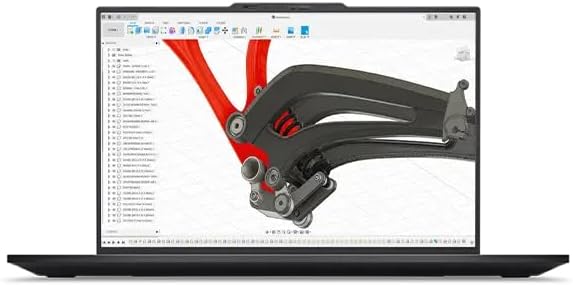
The P1 Gen 9 is for engineers who actually carry their Fusion machine: to the shop floor, to client meetings, onto planes. It’s Lenovo’s newest flagship, with Intel’s Panther Lake chip replacing last year’s Arrow Lake-H, and it starts at just 3.9 pounds.
Key specs
- CPU: Up to Intel Core Ultra 9 386H (16 cores: 4P + 8E + 4LPE, up to 4.9GHz), 50 TOPS NPU
- GPU: Up to Nvidia RTX PRO 2000 Blackwell, 8GB GDDR7 (RTX PRO 1000 also offered)
- RAM: Up to 96GB LPDDR5X-8533 on a replaceable LPCAMM2 module
- Storage: Two M.2 2280 slots (one Gen 5, one Gen 4), up to 8TB, RAID 0/1
- Display: 16-inch 3840 x 2400 IPS (800 nits, 100% DCI-P3, X-Rite calibrated), 3.2K Tandem OLED touch (600 nits SDR, 1,500 nits HDR), or 1920 x 1200 IPS
- Battery: 90Wh with Rapid Charge to 80% in one hour; a 99.9Wh battery is also listed
- Weight: From 3.90lb (1.77kg)
- Ports: 2x Thunderbolt 5, Thunderbolt 4, USB-A 10Gbps, HDMI 2.1, SD Express 7.0, headphone jack; optional 5G; no built-in Ethernet
- Price: From $3,734 build-to-order
What the labs measured (StorageReview)
- Cinebench 2026: 519.9 single / 5,083 multi, 18% ahead of the previous-generation Core Ultra 9 285H with the same GPU
- Sustained CPU: A 30-minute Cinebench loop held 98.3% of its first-run score, with the CPU around 94°C. That’s 8% more sustained performance than Dell’s Pro Precision 5 16S with a similar Panther Lake chip.
- Blender 4.5 (CPU, Monster): 135.4 samples per minute, versus 112.7 on the previous generation
- Memory bandwidth (STREAM Triad): 81,712MB/s, about 31% higher than the previous generation
- SSD (fio, 25GiB file): 10,012MB/s sequential read, 9,203MB/s write, 756.5K random 4K read IOPS
- Usable GPU memory: 7.7GB measured on the 8GB RTX PRO 2000
- Display and battery: StorageReview says its battery results will arrive in a later update, and no lab has measured the panel yet. Until then, the figures to go on are Lenovo’s: 800 nits and 100% DCI-P3 with factory X-Rite calibration on the 4K IPS panel, and a 90Wh battery.
Pros
- Lenovo lists Autodesk among its ISV certifications, and the RTX PRO GPU is certified hardware
- Very light for a 16-inch workstation, in an aluminum, MIL-STD-810H tested body
- Thunderbolt 5, replaceable RAM, two SSD slots and a replaceable battery
- Holds its clocks under sustained load better than rivals with similar chips
- A bright, calibrated 4K IPS panel that’s ideal for drawings
Cons
- 8GB of VRAM limits heavy local rendering
- StorageReview found single-core speed barely moved from the previous generation
- Only four P-cores, so it doesn’t literally meet Autodesk’s “8+ performance cores” line
- Lenovo’s pricing swings a lot from week to week
- Independent battery results aren’t out yet
Why I’d buy it for Fusion
IT departments and engineering firms want certified, serviceable hardware, and that’s what this is. Its Cinebench 2026 single-core score (519.9) is essentially tied with the same chip in the Zephyrus G16 (521, per Ultrabookreview), so modeling feels the same. The RTX PRO 2000’s 8GB meets Autodesk’s GPU recommendation exactly, which is fine for modeling and drawings but tight for big renders.
My configuration advice: Core Ultra 9 386H, RTX PRO 2000, 64GB and the 4K IPS panel. Then wait for one of Lenovo’s frequent sales.
4. ASUS ROG Zephyrus G16 (2026): Best All-Rounder for Hobbyists, Makers and Creators
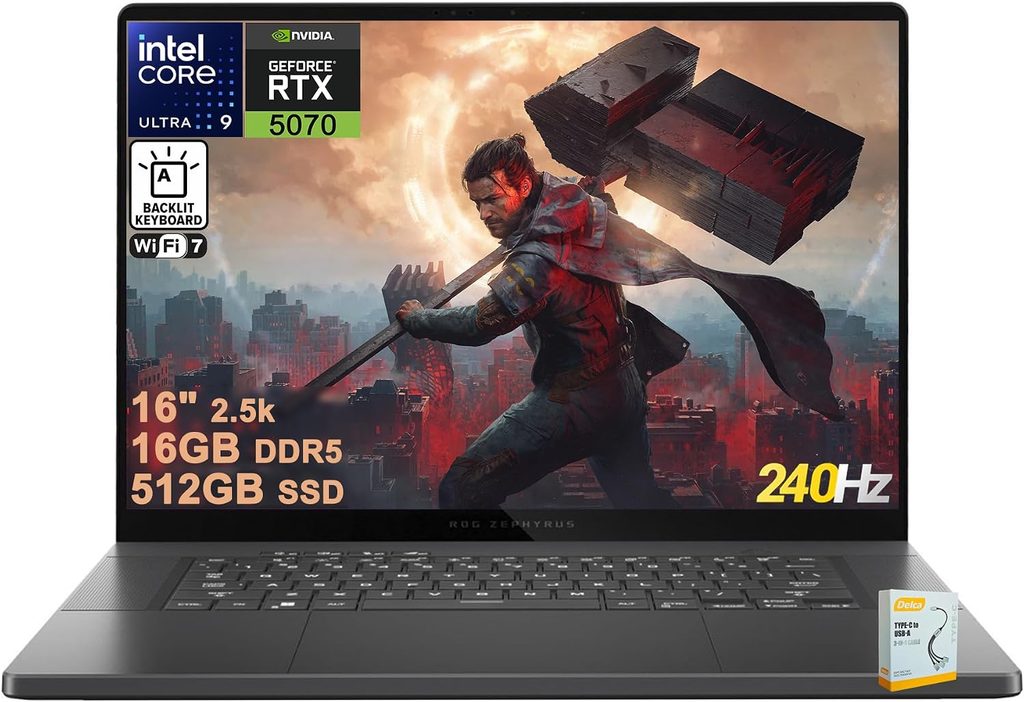
This is the laptop I’d point a maker or freelancer toward if they use Fusion alongside Blender, games and video editing. It packs up to an RTX 5080 into a slim aluminum body and still lasts most of a day on battery, which used to be impossible for a machine like this.
Key specs
- CPU: Intel Core Ultra 9 386H (Panther Lake, 16 cores, up to 4.9GHz)
- GPU: GeForce RTX 5060 or 5070 (8GB), RTX 5070 Ti (12GB), RTX 5080 (16GB) or RTX 5090 (24GB); the RTX 5080 runs at up to 160W
- RAM: Up to 64GB LPDDR5X-8533, soldered
- Storage: Two M.2 2280 PCIe 4.0 slots; Notebookcheck’s unit used a 2TB Samsung PM9C1b
- Display: 16-inch 2560 x 1600 OLED, 240Hz, G-Sync; ASUS rates it at 500 nits SDR, 1,100 nits HDR and 100% DCI-P3
- Battery: 90Wh; 250W adapter plus USB-C charging up to 100W
- Weight: 4.24lb (1.92kg) for the RTX 5080 model per Notebookcheck
- Ports: Thunderbolt 4, USB-C 10Gbps, 2x USB-A 10Gbps, HDMI 2.1, UHS-II SD reader, headphone jack
- Price: About $3,389 for RTX 5080, 32GB and 2TB at Best Buy (cited by Notebookcheck)
What the labs measured
- Geekbench 6: 2,907 single / 17,080 multi (Ultrabookreview); 2,877 / 16,960 (Tom’s Guide)
- Cinebench 2024: 127 single / 1,283 multi (Ultrabookreview, RTX 5080 unit)
- Cinebench R23: 2,129 single / 21,328 multi in a 10-minute loop (Ultrabookreview)
- 3DMark: Time Spy 17,840 and Steel Nomad 4,484 (Notebookcheck); Time Spy 18,672, Port Royal 12,461 and Steel Nomad 4,603 (Ultrabookreview)
- Battery: 16 hours 42 minutes of video playback (LaptopMedia); about 14 hours in Tom’s Guide’s web test
- Display: Notebookcheck confirmed a much brighter panel than the 2025 model; LaptopMedia measured high reflectance (94.2 GU) despite ASUS’s anti-glare treatment, and both noted OLED brightness pulsing (PWM)
- Noise: About 52 dBA in Manual mode, 42 to 43 dBA in Performance and under 35 dBA in Silent (Ultrabookreview)
- Power: About 196W average under combined CPU and GPU stress (Notebookcheck)
Pros
- A lot of GPU in a 4.2lb aluminum chassis; the RTX 5070 Ti and 5080 easily clear Autodesk’s 8GB VRAM bar
- Battery life that’s genuinely surprising for an RTX 5080 laptop
- Excellent keyboard, speakers and 240Hz OLED
- Two SSD slots
Cons
- GeForce cards aren’t Autodesk-certified for professional use
- Soldered RAM, so buy 32GB at least and 64GB if you can
- No Thunderbolt 5 or PCIe 5.0 storage, and the OLED uses PWM dimming
- Loud at full power
- Expensive for a gaming laptop
Why I’d buy it for Fusion
Its single-core scores match the ThinkPad P1 Gen 9’s same chip, so sketching and modeling feel identical. Meanwhile, it has far more GPU muscle for rendering and dense viewports. The only real trade-off is certification. For a hobbyist or small shop, that usually doesn’t matter. For a company with a formal CAD support contract, I’d pick the ThinkPad or the Dell.
You might wonder why I didn’t choose ASUS’s creator-focused ProArt P16 instead. The 2026 ProArt P16 moved to Nvidia’s Arm-based RTX Spark N1X chip, and Fusion isn’t certified on Windows on Arm yet. The Zephyrus is the safer ASUS bet for Fusion.
5. Acer Predator Helios Neo 16S AI (2026): Most CPU Speed for the Money
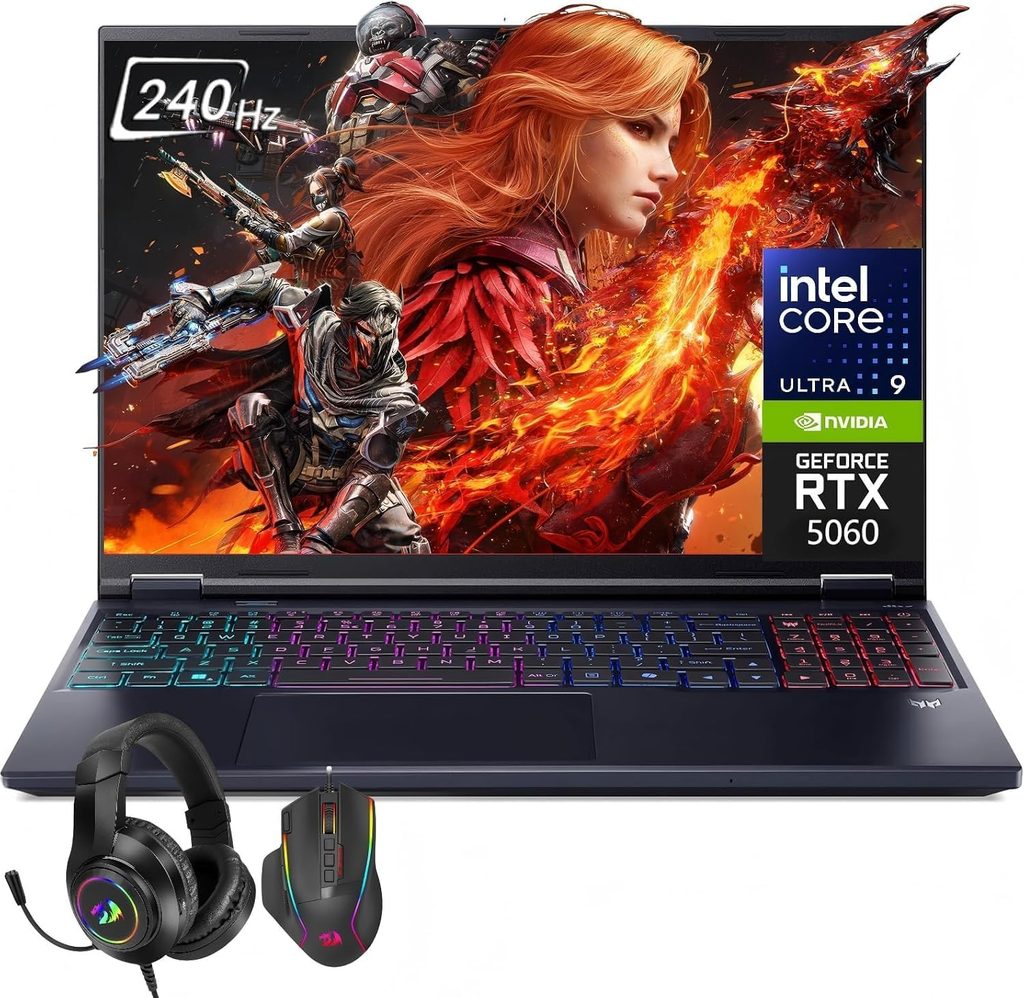
This one is for a specific person: someone who mostly models and generates toolpaths, wants maximum CPU speed per dollar on Windows, and doesn’t care about certification or all-day battery. Its Core Ultra 9 290HX Plus is Intel’s fastest mobile chip, and it posted the best Windows single-core result I found for any laptop on this list.
Key specs
- CPU: Intel Core Ultra 9 290HX Plus (24 cores: 8P + 16E, Arrow Lake-HX refresh)
- GPU: Nvidia GeForce RTX 5080 16GB at 115W (as reviewed)
- RAM: 32GB DDR5-6400 (as reviewed)
- Storage: 2x 1TB PCIe 4.0 SSDs (as reviewed by PC Gamer)
- Display: 16-inch 2560 x 1600 OLED, 240Hz, VESA DisplayHDR True Black 500
- Battery: 92Wh
- Weight: 5.07lb (2.3kg)
- Ports: 3x USB-A, 2x USB-C, HDMI, Ethernet, microSD reader
- Price: $3,299 for the reviewed configuration, per PC Gamer
What the labs measured (PC Gamer)
- Cinebench 2024: 135 single / 1,705 multi, the highest Windows single-core result in this guide
- Blender 4.2 (Junkshop): 126.27 samples per minute on the CPU and 1,544.91 on the GPU
- 3DMark: Time Spy Extreme 7,785 (GPU score 6,897) and Port Royal 10,846
- SSD: A 3DMark Storage score of 981; PC Gamer called these drives some of the slowest it had seen
- Battery: 53 minutes in PCMark 10’s gaming rundown
- Thermals: In Metro Exodus, the CPU averaged 77°C and peaked at 105°C, while the GPU averaged just 66W, far below its 115W limit
Pros
- Top-tier Windows single-core speed for snappy modeling
- 24 cores for CAM and simulation, plus the widest port selection here, including Ethernet
- A beautiful 240Hz OLED, and 16GB of VRAM doubles Autodesk’s recommendation
- Far cheaper than a certified workstation with similar CPU power
Cons
- The cooling holds back both chips in long, heavy loads
- The 115W RTX 5080 performs well below its potential
- Slow SSDs and very short battery life under load
- A consumer GPU, so no certification for professional Fusion use
Why I’d buy it for Fusion
Notebookcheck estimates the 290HX Plus delivers about 11% more CPU performance than the 275HX it replaces, and that lands exactly where Fusion’s interface and CAM engine live. The weak cooling hurts long GPU renders and games much more than bursty modeling. If local rendering is your priority, choose the Zephyrus G16 or the Dell instead. And swap those slow SSDs for a fast Gen 4 drive on day one; it’s a cheap fix.
Head-to-Head: Published Benchmark Results
Every figure below comes from an independent lab, named in the cell. Different labs use different test versions and power modes, so I’d focus on the big patterns rather than small gaps.
| Laptop | CPU single-core | CPU multi-core | Second CPU test | GPU result |
|---|---|---|---|---|
| MacBook Pro 16 (M5 Max) | ~200 (Cinebench 2024, Notebookcheck) | 2,490 (Cinebench 2024, Notebookcheck) | Geekbench 6: 4,338 / 29,261 (Engadget) | Steel Nomad 4,386 (Notebookcheck) |
| Dell Pro Max 16 Plus | 126.3 (Cinebench 2024, Notebookcheck) | 1,907 (Cinebench 2024, Notebookcheck) | Geekbench 6: 3,032 / 20,978 (StorageReview) | RTX PRO 5000 sustained ~125W (Notebookcheck) |
| ThinkPad P1 Gen 9 | 519.9 (Cinebench 2026, StorageReview) | 5,083 (Cinebench 2026, StorageReview) | Blender CPU 135.4 samples/min (StorageReview) | 7.7GB usable VRAM (StorageReview) |
| Zephyrus G16 (2026) | 127 (Cinebench 2024, Ultrabookreview) | 1,283 (Cinebench 2024, Ultrabookreview) | Geekbench 6: 2,907 / 17,080 (Ultrabookreview) | Time Spy 17,840; Steel Nomad 4,484 (Notebookcheck) |
| Acer Helios Neo 16S AI (2026) | 135 (Cinebench 2024, PC Gamer) | 1,705 (Cinebench 2024, PC Gamer) | Blender CPU 126.27 samples/min (PC Gamer) | Time Spy Extreme 7,785; Port Royal 10,846 (PC Gamer) |
For a fair Panther Lake comparison, the Zephyrus G16 scored 521 single and 4,782 multi in Cinebench 2026 (Ultrabookreview), right beside the ThinkPad’s 519.9 and 5,083.
Display, Battery, Storage and Thermals
| Laptop | Display | Battery | SSD speed | Thermals and noise |
|---|---|---|---|---|
| MacBook Pro 16 | 710 nits, 99.3% P3, Delta E 1.1 (Notebookcheck) | 18.5 hrs Wi-Fi (Notebookcheck) | 12,574 / 12,122 MB/s (AppleInsider) | ~70W sustained, very quiet (Notebookcheck) |
| Dell Pro Max 16 Plus | 556.8 nits, 97.3% P3, Delta E 2.42 (Notebookcheck) | 6 hrs 21 min (StorageReview) | 11,918 / 6,118 MB/s, CrystalDiskMark (EngineeringLaptops) | CPU 95-105°C under stress (Notebookcheck) |
| ThinkPad P1 Gen 9 | 800 nits, 100% DCI-P3, X-Rite calibrated (Lenovo spec) | 90Wh, 80% charge in 1 hr (Lenovo spec) | 10,012 / 9,203 MB/s, fio (StorageReview) | CPU ~94°C, 98.3% sustained (StorageReview) |
| Zephyrus G16 (2026) | 500 nits SDR / 1,100 HDR (ASUS spec); 94.2 GU reflectance (LaptopMedia) | 16 hrs 42 min video (LaptopMedia) | PCIe 4.0 Samsung PM9C1b (Notebookcheck) | 52 dBA max, under 35 dBA Silent (Ultrabookreview) |
| Acer Helios Neo 16S AI (2026) | 240Hz OLED, DisplayHDR True Black 500 (Acer spec) | 53 min gaming (PC Gamer) | 3DMark Storage 981, slow (PC Gamer) | CPU peak 105°C, GPU averaged 66W (PC Gamer) |
How I read all this: Apple wins single-core speed and efficiency by a mile. Dell wins GPU class, memory capacity and multi-core throughput. The two Panther Lake machines are evenly matched on CPU, with the ThinkPad holding clocks a touch better and the Zephyrus bringing far more GPU. The Acer has the strongest Windows single-core result but the weakest cooling.
Specs Comparison
| MacBook Pro 16 | Dell Pro Max 16 Plus | ThinkPad P1 Gen 9 | Zephyrus G16 (2026) | Helios Neo 16S AI (2026) | |
|---|---|---|---|---|---|
| CPU | M5 Pro / M5 Max (18-core) | Core Ultra 9 285HX (24C) | Core Ultra 9 386H (16C) | Core Ultra 9 386H (16C) | Core Ultra 9 290HX Plus (24C) |
| Top GPU | 40-core integrated | RTX PRO 5000 24GB | RTX PRO 2000 8GB | RTX 5090 24GB | RTX 5080 16GB (115W) |
| Certified for pro Fusion work | Apple silicon, natively supported | Yes (RTX PRO) | Yes (RTX PRO, Autodesk ISV listed) | No (GeForce) | No (GeForce) |
| Max RAM | 128GB unified | 128GB CAMM2, removable | 96GB LPCAMM2, replaceable | 64GB, soldered | 32GB as reviewed |
| Display | 16.2″ mini-LED 120Hz | 16″ 4K OLED 120Hz | 16″ 4K IPS or 3.2K OLED | 16″ 2.5K OLED 240Hz | 16″ 2.5K OLED 240Hz |
| Battery | 99.6Wh | 96Wh | 90Wh | 90Wh | 92Wh |
| Weight | 4.73lb | 6.27lb | 3.90lb | 4.24lb | 5.07lb |
| Thunderbolt 5 | Yes (3x) | Yes (2x) | Yes (2x) | No (TB4) | No |
| Starting price | $2,699 | ~$3,700 | $3,734 | ~$3,389 (RTX 5080) | $3,299 (as reviewed) |
Fusion on Mac vs. Windows: The Gotchas Nobody Warns You About
- Install Rosetta 2 on day one. Fusion runs natively on Apple silicon, but Autodesk says a few commands still prompt for Rosetta 2 while they move to ARM64. Better to install it before it interrupts a deadline.
- Your macOS version matters. Autodesk recommends macOS 15.7 Sequoia or macOS 26 Tahoe. Sonoma is the minimum and has a known appearance issue with Relief Patterns on Apple silicon.
- Check your add-ins and post-processors first. Before switching platforms, confirm the third-party add-ins, CAM post-processors and machine-connection tools your shop depends on work on your new OS.
- Windows on Arm is a trap for Fusion right now. Emulation works, but it isn’t certified. If Fusion is your main tool, skip Snapdragon and RTX Spark laptops for now.
- Dual graphics can quietly slow you down. Autodesk’s own performance guide tells laptop owners with two GPUs to make sure Fusion runs on the dedicated card. Many people never check.
- Windows builds are strict. Fusion needs Windows 11 23H2 (Build 22631) or newer, and Insider builds aren’t supported.
- The browser version isn’t a free fallback. Autodesk says running Fusion in a web browser requires a Commercial or verified Education entitlement.
The Graphics Settings I’d Use on Each Laptop
Autodesk’s official performance advice comes down to three things: switch the Graphics Preset to Performance when things feel heavy, make sure the dedicated GPU is doing the work, and try each graphics driver option (DirectX 9, DirectX 11, OpenGL) under Preferences > General. Here’s how I’d apply that to each pick.
- MacBook Pro 16: Leave the driver on auto and turn on high-resolution canvas graphics, as Autodesk recommends for Retina screens. Performance holds up unplugged, so you don’t need a special power profile.
- Dell Pro Max 16 Plus: Assign Fusion to the RTX PRO GPU in the Nvidia Control Panel. Use Dell Optimizer’s Performance mode when plugged in, and keep the RTX PRO enterprise driver current.
- ThinkPad P1 Gen 9: Assign Fusion to the RTX PRO 2000 in Windows Graphics settings and use Lenovo’s Ultra Performance mode on AC power. StorageReview notes Windows defaults the 4K panel to 250% scaling, so try 200% to match Autodesk’s 4K recommendation.
- Zephyrus G16: Use Armoury Crate’s Performance mode rather than Manual for long sessions. Ultrabookreview measured it at 42 to 43 dBA versus about 52 dBA, and modeling barely notices the difference.
- Acer Helios Neo 16S AI: Plug in, pick the highest performance profile and pin Fusion to the RTX 5080. Because cooling is the weak spot, leave ambient occlusion and anti-aliasing off on very large assemblies.
- Any Windows laptop: If orbiting feels laggy or “rubber-bandy” on DirectX 11, try OpenGL. Several users on Autodesk’s forums report this fixed it for them. That’s anecdotal, so test both drivers on your own models.
My 10-Minute Fusion Test Before You Commit
Spec sheets can’t tell you how a laptop feels in Fusion. If you can get hands-on time, whether at a store, through a friend, or inside a return window, this quick routine shows you more than any benchmark.
- Check which GPU Fusion uses. Open Fusion with Task Manager (Windows) or Activity Monitor (Mac) beside it, and confirm the dedicated GPU lights up when you orbit.
- Open your biggest real design, not a sample cube. Orbit it hard with shaded-with-edges visual style for 30 seconds. Watch for stutter.
- Time a rebuild. Roll the timeline marker to the very start, edit one early sketch dimension, and time the recompute with your phone’s stopwatch. This is the single-core test that matters most.
- Generate a real toolpath. Run a 3D adaptive clearing operation on one of your parts and time it. This tests multi-core speed and sustained cooling.
- Listen and touch. During the toolpath, note fan noise and feel the keyboard deck and palm rests.
- Repeat step 3 on battery. Some Windows laptops slow down sharply unplugged. If you model on the go, this tells you what you’ll really get.
Write the times down and compare them against your current machine. If the rebuild in step 3 isn’t clearly faster, a new laptop won’t change your daily experience much, no matter how big its GPU is.
What Each Laptop Really Costs Over Three Years
Here’s a simple way to compare them: purchase price spread over three years of use. This leaves out your Fusion subscription, taxes and resale value.
| Laptop | Example price | Cost per year (3 years) | Ownership notes |
|---|---|---|---|
| MacBook Pro 16 (M5 Pro) | $2,699 | ~$900 | 1-year warranty; AppleCare+ is $99.99 a year (Tom’s Hardware); no later upgrades |
| Dell Pro Max 16 Plus | ~$3,700 | ~$1,233 | 3-year warranty standard; RAM, GPU module and USB-C ports replaceable |
| ThinkPad P1 Gen 9 | $3,734 | ~$1,245 | Replaceable RAM, SSDs and battery; 1-year and 3-year warranty options |
| Zephyrus G16 (RTX 5080) | ~$3,389 | ~$1,130 | Soldered RAM; buy 64GB if you’ll keep it 3+ years |
| Acer Helios Neo 16S AI | $3,299 | ~$1,100 | Slow SSDs are cheap and easy to replace |
The MacBook Pro has the lowest yearly cost for someone who mostly models. The Dell and ThinkPad cost less to upgrade in year two or three. And with memory prices unusually high in 2026, buying enough RAM up front matters more than ever.
Which One Should You Buy? A Quick Decision Path
- Do you get paid for Fusion work, or does your company require certified hardware? Yes: go to step 2. No: go to step 4.
- Do you carry it every day? Yes: ThinkPad P1 Gen 9 with 64GB and RTX PRO 2000. No, it mostly lives on a desk: go to step 3.
- Do you render locally, simulate, or run big CAM jobs? Yes: Dell Pro Max 16 Plus with RTX PRO 3000 or 5000 and 64-128GB. No, mostly modeling and drawings: MacBook Pro 16 (M5 Pro) if your team allows macOS, otherwise the ThinkPad.
- Are you happy on macOS? Yes: MacBook Pro 16 (M5 Pro, 48GB). No: go to step 5.
- Do you also game, use Blender or edit video? Yes: ASUS ROG Zephyrus G16 (2026) with an RTX 5070 Ti or 5080 and 32-64GB. No, you want maximum CPU per dollar: Acer Predator Helios Neo 16S AI (2026).
- On a tight student budget? Autodesk says minimum-spec machines are fine for learning CAD and slicing STLs but may struggle with assemblies of hundreds of parts or long design histories. Check whether your education license includes cloud rendering before spending more on hardware.
Buying Guide: How to Choose a Laptop for Fusion 360
CPU: single-core speed first, cores second. For modeling, buy the highest single-core score you can afford. Apple’s M5 family leads, and Intel’s 290HX Plus and 386H are the strongest Windows options. If you do lots of CAM or local simulation, 24-core Intel HX chips save real time.
RAM: 32GB is the real minimum. That’s Autodesk’s recommendation on Windows. I’d go to 64GB for assemblies over a few hundred parts or for local simulation. On soldered-RAM laptops like the Mac and Zephyrus, buy for year three.
GPU: 8GB+ of VRAM, certified if it’s your job. RTX PRO Blackwell (Dell, Lenovo) is the certified route. A GeForce RTX 5070 Ti or 5080 (ASUS, Acer) is the hobbyist route.
Display: 16 inches, high resolution. Autodesk recommends 4K at 200% scaling. A 16-inch 2.5K to 4K panel with good color accuracy makes long drawing sessions easier on your eyes.
Storage: 1TB at minimum. Fusion needs 15GB+ for the install and cache, but local caches, renders and CAM files pile up fast.
Ports: Thunderbolt for docking. If you run two monitors and a SpaceMouse at your desk, a Thunderbolt 4 or 5 dock makes life much easier.
Internet: Fusion is a cloud app. Autodesk recommends 25+ Mbps down and 5 Mbps up. A Wi-Fi 7 laptop on a slow connection won’t help much.
Frequently Asked Questions
What are the Fusion 360 laptop requirements in 2026?
On Windows, Fusion needs Windows 11 23H2 (Build 22631) or newer. The minimum is a 64-bit x86 CPU with two performance cores, 8GB of RAM and a 1GB DirectX 11 GPU. Autodesk recommends 8+ performance cores, 32GB+ of RAM and a dedicated GPU with 8GB+ of memory. On a Mac, the minimum is macOS 14 with an M1 and 4GB of RAM; the recommendation is macOS 15.7 or 26 with an M1 Max or newer and 16GB+.
Is a MacBook good for Fusion 360?
Yes, and right now it’s my top pick. Fusion runs natively on Apple silicon, and the M5 Pro and M5 Max lead every published single-core test I found. That’s the speed Fusion’s modeling tools rely on most. A few commands may ask you to install Rosetta 2.
Does Fusion 360 run on Snapdragon or Nvidia RTX Spark laptops?
It can, through Windows 11’s Prism emulation. But Autodesk says that setup hasn’t completed certification, so I wouldn’t make an Arm-based Windows laptop my main Fusion machine yet.
How much RAM do I need for Fusion 360?
Autodesk recommends 32GB or more on Windows and 16GB or more on a Mac. I’d buy 32GB for hobby and student work, and 64GB for professional assemblies, local simulation or heavy rendering.
Do I need a workstation GPU like the Nvidia RTX PRO?
For professional work, Autodesk recommends certified graphics such as Nvidia’s RTX PRO line. For hobbyists, it describes consumer GeForce cards as generally compatible, though not validated.
Which matters more for Fusion 360, the CPU or the GPU?
For everyday modeling, the CPU matters more, specifically its single-core speed. The GPU matters most for high-resolution viewports, local rendering and large assemblies. CAM toolpaths and simulation scale with CPU core count.
Can I use cloud rendering instead of buying a powerful laptop?
Partly, yes. Cloud rendering uses tokens from your Autodesk account, while local rendering uses your own hardware. If you render occasionally, the cloud works well. If you render daily, a strong local GPU usually pays off.
What’s the best Fusion 360 laptop for students?
Of my five picks, the most affordable entry points are the MacBook Pro 16 with M5 Pro ($2,699) and a lower-tier Zephyrus G16 with an RTX 5070. Honestly, for coursework, any laptop with a recent CPU, 16 to 32GB of RAM, and Apple silicon or an 8GB GeForce RTX GPU will do the job.
Is a gaming laptop OK for Fusion 360?
For hobbyists and small shops, yes. Gaming laptops like the Zephyrus G16 and Acer Helios Neo 16S AI have fast CPUs and plenty of VRAM. The trade-off is that GeForce cards aren’t certified for professional use, which matters if your employer or support contract requires it.
My Final Verdict
If you remember one thing from this guide, make it this: buy for the Fusion work you actually do, not for the biggest number on the spec sheet.
For most people, that points to the MacBook Pro 16 with M5 Pro. It’s the fastest laptop for modeling, it runs all day on battery, and it handles big assemblies with ease. If you need Windows and work with renders, simulation and heavy CAM, the Dell Pro Max 16 Plus is the most complete Fusion workstation you can buy. Road warriors who need certified hardware should get the ThinkPad P1 Gen 9. Makers who also game and render will be happiest with the Zephyrus G16 (2026). And if raw Windows CPU speed per dollar is all you care about, the Acer Predator Helios Neo 16S AI (2026) delivers.
Whatever you choose, run my 10-minute test inside your return window. The rebuild time on your own design will tell you more than any review, including this one.
Sources
Autodesk
- System requirements for Autodesk Fusion
- How to optimize settings in Fusion for performance
- Fusion help: rendering and cloud credits
- Autodesk Community: DirectX 11 laggy rubber-band effect
Apple MacBook Pro 16 (M5 Pro / M5 Max)
- Notebookcheck: Apple MacBook Pro 16 (2026) M5 Max review
- Engadget: MacBook Pro M5 Max 16-inch review
- AppleInsider: M5 Max 16-inch MacBook Pro review
- Tom’s Guide: MacBook Pro 16-inch M5 Pro review
- Tom’s Hardware: Apple MacBook Pro 14-inch M5 Max review
Dell Pro Max 16 Plus
- Notebookcheck: Dell Pro Max 16 Plus review
- StorageReview: Dell Pro Max 16 Plus review
- StorageReview: Dell Pro Max 16 Premium review (Pro Max 16 Plus comparison data)
- StorageReview: Best mobile workstations
- ITPro: Dell Pro Max 16 Plus review
- EngineeringLaptops: Dell Pro Max laptop review
- TechRadar: RTX PRO 5000 Blackwell first review
Lenovo ThinkPad P1 Gen 9
- StorageReview: Lenovo ThinkPad P1 Gen 9 review
- Lenovo PSREF: ThinkPad P1 Gen 9 specifications
- Notebookcheck: ThinkPad P1 Gen 9 global launch and pricing
ASUS ROG Zephyrus G16 (2026)
- Notebookcheck: Asus ROG Zephyrus G16 2026 review
- Ultrabookreview: Asus ROG Zephyrus G16 GU606 review
- LaptopMedia: ASUS ROG Zephyrus G16 (GU606, 2026) review
- Tom’s Guide: Asus ROG Zephyrus G16 (2026) review
- 91mobiles: ASUS ROG Zephyrus G16 (2026) review
- Notebookcheck: Asus ProArt P16 RTX Spark review verdict
Acer Predator Helios Neo 16S AI (2026)
- PC Gamer: Acer Predator Helios Neo 16S AI review
- Notebookcheck: Acer Predator Helios Neo 16S AI PHN16S-I71 reviews and specs
- Notebookcheck: Acer 16-inch laptop with Core Ultra 9 290HX Plus and RTX 5080
- Acer: Predator Helios Neo refresh announcement

Hi, my name is Burak. I am a mechanical engineer. I have been writing laptop reviews for the Engineering Laptops website since 2020. Please feel free to contact me if you have any questions.