
Last updated: October 13, 2026
Table of contents
- My Quick Picks
- What Chief Architect X18 Really Needs
- How I Chose These Laptops
- Best Laptops for Chief Architect in 2026: The 3 I’d Actually Buy (With Real Benchmark Data)
- Head-to-Head Comparison
- Match Your Projects to the Right Laptop
- 7 Practical Tips Most Reviews Don’t Mention
- Buying Checklist
- Laptops I Considered but Didn’t Pick
- A Word on Prices
- Frequently Asked Questions
- My Final Verdict
- Sources
Picture this. You spend close to $7,000 on one of the most powerful creator laptops of 2026. It has 128GB of memory, a top-tier NVIDIA chip and a gorgeous screen. You install Chief Architect, open a client’s dream house, and find out that Chief Architect doesn’t support your laptop at all.
That isn’t a made-up horror story. It’s a real trap that some fall 2026 machines walk straight into, and I’ll explain exactly which ones further down.
Here’s the other side of it. Not long ago, a ray-traced render of a house in Chief Architect could take hours. Chief’s own team says so. With the right graphics card, the newest versions produce photo-realistic views in seconds. That’s the kind of thing that closes a deal while you’re still sitting at the client’s kitchen table.
So the gap between the right laptop and the wrong one isn’t about a few percent of speed. On one side you’re watching a progress bar. On the other, you’re showing your client their future living room with sunlight pouring through the windows, live, while they’re still nodding along.
I wrote this guide because most “best laptops for Chief Architect” lists I’ve read recycle generic gaming advice, recommend last year’s models, or never open Chief’s own requirements page. I did the opposite. I started with Chief Architect X18’s official specs and the company’s own hardware advice. Then I checked every pick against published, independent lab data on processor speed, graphics speed, display quality, battery life, heat and SSD speed.
Three laptops made the cut, each from a different brand, and all of them are current-generation models.
My Quick Picks
- Best overall for Chief Architect (Windows): Lenovo Legion Pro 7i Gen 11 with RTX 5080
- Best portable pick for designers on the move: ASUS ROG Zephyrus G16 (2026)
- Best Mac for Chief Architect: Apple MacBook Pro 16 with M5 Max
| Lenovo Legion Pro 7i Gen 11 | ASUS ROG Zephyrus G16 (2026) | Apple MacBook Pro 16 (M5 Max) | |
|---|---|---|---|
| Best for | Heavy ray tracing, large custom homes, desk setups | Builders and designers who meet clients on site | Mac-based studios and mixed creative workflows |
| Processor | Intel Core Ultra 9 290HX Plus (24 cores) | Intel Core Ultra 9 386H (16 cores) | Apple M5 Max (18-core CPU) |
| Graphics | RTX 5080 Laptop, 16GB GDDR7, 175W | RTX 5080 Laptop, 16GB GDDR7, up to 135W | 40-core Apple GPU |
| Memory | 32GB DDR5-6400, upgradeable | Up to 64GB LPDDR5x-8533, soldered | 48GB unified as tested, up to 128GB |
| Display | 16″ 2560×1600 OLED, 240Hz | 16″ 2560×1600 OLED, 240Hz | 16.2″ 3456×2234 Mini-LED, 120Hz |
| Weight | 5.83 lb (measured on the identical Gen 10 chassis) | 4.24 lb | 4.73 lb |
| Price seen | $3,467.49 on sale ($5,578.99 list) | $3,389 (32GB/2TB at Best Buy) | $4,499 (48GB/2TB) |
| DLSS denoising in Chief | Yes | Yes | No |
What Chief Architect X18 Really Needs
Chief Architect X18 is the current Premier version. It was released on August 5, 2026, and X17 has now moved to Chief’s “prior versions” requirements page. Here’s what Chief officially asks for, and what I’d actually buy.
| Component | Chief’s minimum | Chief’s recommendation | What I’d buy in a laptop |
|---|---|---|---|
| Operating system | Windows 10/11 64-bit (ARM not supported), macOS Sequoia or Tahoe | Windows 11 or macOS Tahoe | Windows 11 on Intel/AMD, or macOS on Apple Silicon |
| Processor | Multi-core; Apple M1 or newer | Intel Core Ultra or AMD Ryzen 9; Apple M5 or newer | Core Ultra 9 or M5 Max |
| Memory | 16GB | 32GB | 32GB minimum, 64GB for big custom homes |
| Graphics | 4GB VRAM, DirectX 12 with Shader Model 6.0, or Intel 11th-gen+ integrated | NVIDIA RTX 5080 or AMD Radeon RX 7900 | RTX 5080 Laptop with 16GB |
| Storage | 5GB free | 1TB SSD | 1TB minimum, 2TB if you use many manufacturer catalogs |
| Screen | 16 inches recommended in the install guide | 16 inches or larger | 16-inch laptop plus an external monitor |
| Internet | License check every 14 days | — | Plan for it if you work at remote sites |
Why the graphics card matters more than anything else
Chief Architect looks like a floor plan program on the surface. Underneath, it keeps a full 3D model of the house alive behind every plan, elevation and camera view, and your graphics card draws all of it.
Chief’s own blog explains the change in plain terms. The old CPU-based ray tracing could take hours. The newer GPU-powered Physically Based technique renders realistic views in seconds. Real-time ray tracing arrived on Windows with X13 and on Mac with X16.
There’s an important detail here. The Physically Based and Clay rendering techniques need a graphics card that supports ray tracing, and DLSS Real-Time Denoising, which cleans up grainy ray-traced views fast, only works on NVIDIA RTX cards. That’s why I don’t recommend thin office laptops with integrated graphics. They’ll open your plans, but they won’t give you the views that sell a project.
Forget the old OpenGL advice
Lots of older buying guides still tell you to look for “good OpenGL support.” For X18 on Windows, Chief lists DirectX 12 with Shader Model 6.0 or newer. On Mac, the requirement is simply the Apple Silicon generation. So shop for RTX ray tracing hardware on Windows and an M-series generation on Mac. The OpenGL advice is out of date.
The trap I mentioned at the start
Chief’s requirements state clearly that Windows computers with ARM processors aren’t supported, and they give Snapdragon as the example. That matters a lot this fall, because some brand-new creator laptops are built on NVIDIA’s RTX Spark platform. It pairs a 20-core ARM-based Grace CPU with Blackwell graphics.
The 2026 ASUS ProArt P16 (H7607) is one of them, listed at $6,999.99 for 128GB of memory and 2TB of storage. As I read Chief’s rule, an ARM-based machine falls outside supported hardware, however powerful it is. If a spec sheet says “Snapdragon” or “RTX Spark,” contact Chief support before you spend a cent.
How I Chose These Laptops
I want to be completely transparent here, because you deserve to know where the numbers come from.
- I started with Chief Architect’s own documents. That meant the current system requirements page, the X18 download and installation guide, the prior-versions requirements article, the official list of supported Mac models, and Chief’s April 2026 blog post on choosing a computer for its software. Every laptop here had to clear Chief’s recommended specs, not just the minimum.
- I only considered current-generation hardware as of October 2026. On Windows, that means NVIDIA’s RTX 50-series laptop graphics and Intel’s newest Arrow Lake HX refresh and Panther Lake processors. On Mac, it means the M5 Max MacBook Pro 16, the newest 16-inch model.
- I gathered independent lab measurements from established reviewers. These include Notebookcheck, Tom’s Guide, MakeUseOf, Ultrabookreview, AppleInsider, The Verge, JustJoshTech and Pokde. When a figure comes from a laptop’s previous generation with identical hardware in that area, I say so right next to the number.
- I followed strict rules: one laptop per brand, no outdated models, and no numbers that weren’t actually published.
One honest note. Nobody publishes standardized Chief Architect render-time benchmarks for these specific laptops, and Chief doesn’t either. So I use graphics benchmarks like 3DMark and Cinebench GPU as the closest stand-in for ray-tracing speed in Chief.
Best Laptops for Chief Architect in 2026: The 3 I’d Actually Buy (With Real Benchmark Data)
1. Lenovo Legion Pro 7i Gen 11 (RTX 5080): Best Overall Laptop for Chief Architect
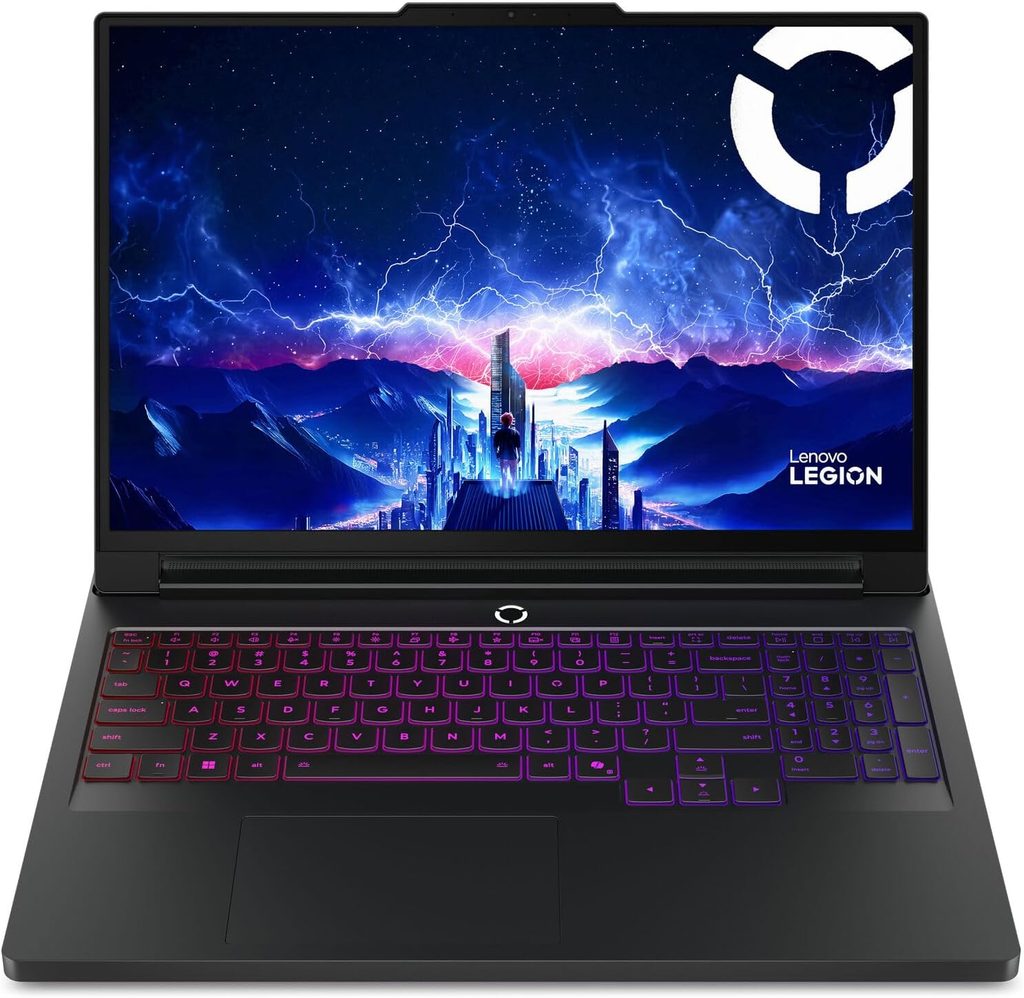
Key specs (MakeUseOf review unit, model 83F500M0US)
- Processor: Intel Core Ultra 9 290HX Plus, 24 cores (8 performance + 16 efficiency), up to 5.5GHz
- Graphics: NVIDIA GeForce RTX 5080 Laptop GPU, 16GB GDDR7, 175W
- Memory: 32GB DDR5-6400 in two user-replaceable slots
- Storage: PCIe Gen 5 SSD, plus a second M.2 slot
- Display: 16-inch 2560×1600 OLED, 240Hz, factory X-Rite Pantone calibration
- Battery: 99.9Wh
- Charger: 400W
- Operating system: Windows 11 Home
Pros
- Runs the exact GPU Chief recommends at the full 175W, the highest power you’ll find in a 16-inch laptop
- 16GB of video memory gives you plenty of room for textures, lights and furniture
- Socketed RAM, so you can go from 32GB to 64GB without buying a new laptop
- Very fast PCIe Gen 5 storage for big plans and catalog libraries
- Full support for DLSS Real-Time Denoising in Chief
Cons
- Heavy: 5.83 lb, plus a power brick of about 2.6 lb (measured on the Gen 10 chassis)
- Short battery life away from the outlet
- The list price is steep, so wait for one of its frequent sales
- The fans get loud in the top performance mode
Why it’s my top pick
When you use Chief Architect, the thing I care about most is how quickly your laptop can ray trace a 3D view. Here’s something most buyers miss: two laptops with an “RTX 5080” can perform quite differently, because each manufacturer sets its own power limit. The Legion Pro 7i runs its RTX 5080 at the full 175W, so you’re getting the full-strength version of the exact card Chief recommends.
The 2026 refresh adds Intel’s Core Ultra 9 290HX Plus. Notebookcheck estimates it’s around 7% faster than the 275HX in last year’s model. JustJoshTech measured roughly 6% more speed on average and about 16% better battery life. The processor doesn’t make ray tracing faster, but it does help when Chief rebuilds plans, generates roofs and framing, and builds materials lists on large projects.
Benchmark results
| Test | Result | Source |
|---|---|---|
| Geekbench 7 CPU (single / multi) | 2,885 / 23,920 | MakeUseOf (Gen 11) |
| Geekbench 7 OpenCL (GPU) | 173,036 | MakeUseOf (Gen 11) |
| Cinebench 2026 (single / multi) | 561 / 6,818 | MakeUseOf (Gen 11) |
| Cinebench 2026 GPU | 77,691 | MakeUseOf (Gen 11) |
| 3DMark Steel Nomad (Hybrid mode, Balanced profile) | 3,940 | MakeUseOf (Gen 11) |
| 3DMark Steel Nomad (full power) | 5,365 | Ultrabookreview (Gen 10, same 175W RTX 5080) |
| 3DMark Time Spy | 21,695 | Ultrabookreview (Gen 10, same 175W RTX 5080) |
| 3DMark Port Royal (ray tracing) | 14,437 | Ultrabookreview (Gen 10, same 175W RTX 5080) |
| Cinebench R23 (multi / single) | 36,597 / 2,195 | Notebookcheck (Gen 10) |
| SSD sequential read / write | about 12,430 / 13,200 MB/s | MakeUseOf (Gen 11, CrystalDiskMark) |
Those two Steel Nomad scores tell an important story. MakeUseOf ran its test in Hybrid graphics mode on the Balanced profile and got 3,940. With the same GPU at full power, Ultrabookreview recorded 5,365. My advice: when you ray trace in Chief, switch to dGPU-only mode and the Performance profile. It’s free speed you’d otherwise leave on the table.
Display, heat and battery
Display. The OLED panel is the same one used in the Gen 10. Notebookcheck measured it at 497.8 nits in SDR and 970 nits in HDR. It covers 100% of sRGB and 99.5% of Display P3. The out-of-the-box Delta E was 3.2, which dropped to an excellent 0.84 after calibration. If you check paint and material colors before sending a render to a client, this screen is a joy, though I’d still calibrate it.
Heat and noise. In JustJoshTech’s testing of the Gen 11, the CPU cores sat in the upper 80s °C under load and peaked at 104°C. The Balanced mode is the hidden gem here: it drops noise to around 49 dB while keeping 88% of the performance. For long drafting days, I’d stay in Balanced and only switch to Performance for render sessions.
Battery. This is the weak spot. MakeUseOf found light web browsing drained the battery from full to 12% in about three hours. JustJoshTech managed about 5.5 hours of office work with the dedicated GPU switched off. Tom’s Guide measured 4 hours 37 minutes on the Gen 10. Think of this as a desktop you can carry, not an all-day unplugged laptop.
Who should buy it
If your typical project is a custom home over 3,000 square feet with full interiors, cabinetry, landscaping and several Physically Based camera views, this is the laptop I’d hand you. It’s the machine most likely to keep ray-traced views feeling smooth and interactive.
2. ASUS ROG Zephyrus G16 (2026, GU606): Best Portable Laptop for Chief Architect
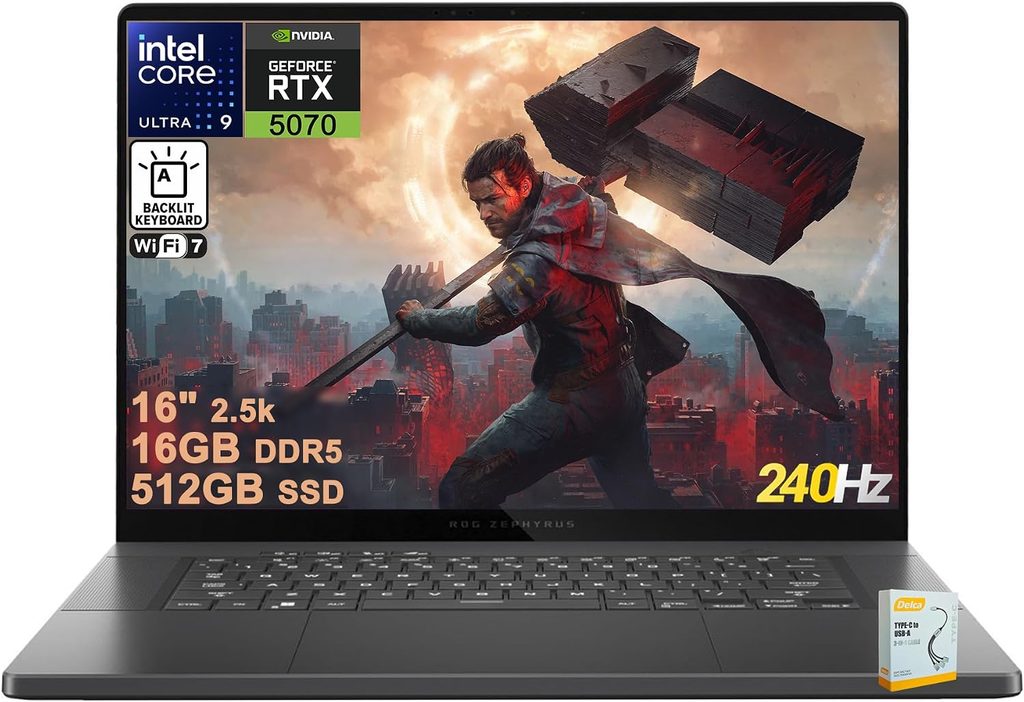
Key specs (Notebookcheck review unit GU606AW)
- Processor: Intel Core Ultra 9 386H (Panther Lake), 16 cores, 70W sustained
- Graphics: NVIDIA GeForce RTX 5080 Laptop, 16GB GDDR7, 135W including 20W Dynamic Boost
- Memory: 64GB LPDDR5x-8533, soldered (32GB configurations also sold)
- Storage: 2TB Samsung PM9C1b, PCIe 4.0, with two SSD slots
- Display: 16-inch 2560×1600 OLED, 240Hz, G-Sync, HDR
- Ports: Thunderbolt 4, three USB 3.x, HDMI, UHS-II SD card reader
- Battery: 90Wh with a 250W charger
- Weight: 4.24 lb
Pros
- The same RTX 5080 class Chief recommends, in a body roughly 1.6 lb lighter than the Legion
- Outstanding battery life for a laptop this powerful: 13 hours 45 minutes in Tom’s Guide’s web test
- Bright OLED with a big jump in HDR brightness
- Premium aluminum build, excellent speakers, and an SD reader for site photos
- Two SSD slots, so you can keep projects and libraries on separate drives
Cons
- Memory is soldered, so buy the amount you’ll need for the next four to five years
- The graphics card is capped lower than the Legion’s 175W
- No Thunderbolt 5 or PCIe Gen 5 SSD support
- The OLED uses PWM dimming, which can bother people sensitive to flicker
- Pricey: $3,699 to start and $4,799 as tested by Tom’s Guide, although I’ve seen the 32GB/2TB model at $3,389
Why I love it for Chief Architect
Plenty of Chief Architect users don’t sit at a desk all day. They’re builders, remodelers and kitchen designers who open a plan at the client’s dining table, move a cabinet run, and spin a 3D view on the spot. For that kind of work, I think the Zephyrus G16 is the sweet spot. You still get an RTX 5080 with 16GB of video memory and full DLSS denoising, but in a laptop that weighs 4.24 lb and has a battery that actually lasts.
Is the 135W cap a real problem? Less than you’d think. Ultrabookreview found this RTX 5080 can go toe-to-toe with the RTX 5090 in the ProArt P16 running at 130W. In Tom’s Guide’s ray-tracing tests at native resolution, it stayed within a frame or two of the full-power Legion Pro 7i Gen 10:
- Cyberpunk 2077 at QHD with RT Ultra: 30 fps vs. 31 fps
- Black Myth: Wukong: 33 fps vs. 35 fps
Notebookcheck also saw the GPU briefly pull up to 160W.
Benchmark results
| Test | Result | Source |
|---|---|---|
| Geekbench 6 (single / multi) | 2,877 / 16,960 | Tom’s Guide |
| Handbrake 4K to 1080p | 3 min 9 sec | Tom’s Guide |
| Cyberpunk 2077, QHD, RT Ultra, no DLSS | 30 fps | Tom’s Guide |
| Shadow of the Tomb Raider, QHD, max | 95 fps | Tom’s Guide |
| Display brightness (SDR / HDR peak) | 469 / 1,052 nits | Tom’s Guide |
| Color gamut | 80.4% DCI-P3 | Tom’s Guide |
| Battery, web browsing at 150 nits | 13 hr 45 min | Tom’s Guide |
| Battery, gaming | 55 min | Tom’s Guide |
| SD card reader | up to 218 MB/s | Notebookcheck |
| Overall rating | 90% | Notebookcheck |
Display and battery life
Notebookcheck says this year’s 240Hz OLED is clearly brighter than the previous model’s. Tom’s Guide measured 469 nits average in SDR and a punchy 1,052 nits in HDR.
The battery is the star. At 13 hours 45 minutes in web browsing, the Zephyrus lasted about an hour longer than the Razer Blade 16 (2026) and nearly three times as long as the Legion Pro 7i Gen 10. A full day of client visits on one charge is realistic. Just plug in when you ray trace, because under heavy load the battery lasted under an hour.
Who should buy it
If you design on the go and most of your work is single-family homes, remodels and kitchens, this is my pick. One strong tip: choose 64GB if your budget allows. The memory can’t be upgraded later. Chief’s recommended RAM has stayed at 32GB since X15, but the minimum doubled from 8GB to 16GB with X16. I expect the bar to keep rising.
3. Apple MacBook Pro 16 (M5 Max): Best Mac for Chief Architect
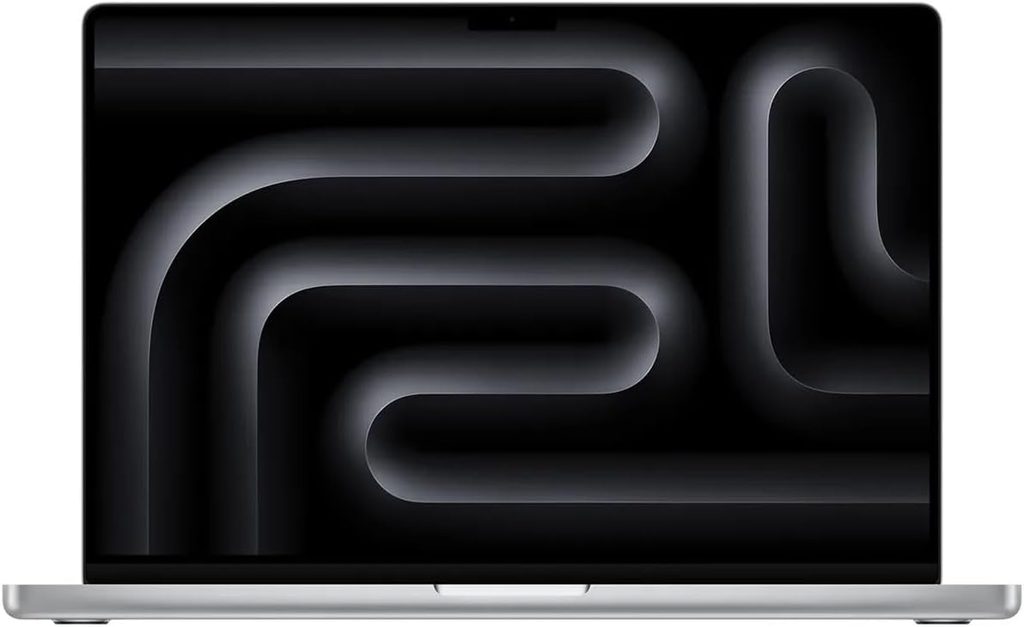
Key specs (Notebookcheck review unit)
- Chip: Apple M5 Max, 18-core CPU (6 super cores + 12 performance cores), 40-core GPU
- Memory: 48GB LPDDR5x-9600 unified memory (configurable up to 128GB)
- Storage: 2TB (configurable up to 8TB)
- Display: 16.2-inch 3456×2234 Liquid Retina XDR Mini-LED, 120Hz; Apple rates it at 1,000 nits SDR and 1,600 nits HDR peak; matte nano-texture option available
- Ports: three Thunderbolt 5, HDMI, SDXC card reader, MagSafe
- Battery: 99.6Wh with a 140W adapter
- Weight: 4.73 lb
- Operating system: macOS 26 Tahoe
Pros
- It’s exactly the laptop Chief names in its Mac recommendation
- It’s on Chief’s official list of Mac models supported by X18
- A superb Mini-LED display and very long battery life in everyday work
- Excellent processor speed for plan rebuilds and large files
- Notebookcheck describes it as usually very quiet or even inaudible
Cons
- Chief says real-time ray tracing on a Mac is slower than on Windows PCs
- No DLSS Real-Time Denoising, because that’s NVIDIA-only
- Nothing is upgradeable after purchase
- Notebookcheck found the 140W adapter isn’t enough under full load: the battery dropped about 12% per hour while plugged in
- Expensive: $4,499 for 48GB/2TB
Why it’s the right Mac (and the honest catch)
If your office runs on Macs, you don’t have to switch platforms to use Chief Architect. Chief’s recommended Mac setup is 32GB of memory, a 1TB SSD and an Apple M5 or newer, and for laptops it specifically names the 16-inch MacBook Pro. The M5 Max model clears all of that with room to spare. Chief’s own April 2026 hardware guide goes further: for heavy rendering on a Mac, it suggests an M5 Max with a 32-core GPU or better. This 40-core model qualifies.
Now for the part most “best laptop” lists leave out. Chief’s own blog admits that real-time ray tracing on a Mac is slower than on a Windows PC. The reason it gives is history: Windows has had hardware ray-tracing tools since around 2018, while Apple only added them in 2023. Chief says that five-year head start shows up as faster performance on Windows. And DLSS denoising isn’t available on the Mac at all.
The independent numbers agree. Notebookcheck’s analysis places the M5 Max GPU roughly level with a laptop RTX 5070, one tier below the RTX 5080 Chief recommends for Windows. In other words, the MacBook Pro is a fantastic machine for designing in Chief and a capable one for rendering, but it isn’t the fastest rendering laptop you can buy.
One more tip: pick the 16-inch over the 14-inch. Notebookcheck found the M5 Max runs about 15% faster in the larger body thanks to better cooling, and its Cinebench 2024 multi-core score was 18% higher.
Benchmark results
| Test | Result | Source |
|---|---|---|
| Geekbench 6 (single / multi) | 4,299 / 29,147 | AppleInsider |
| Geekbench 6 Metal (GPU) | 223,887 (M4 Max 40-core: 163,927) | AppleInsider |
| 3DMark Steel Nomad | 4,296 | Pokde |
| 3DMark Steel Nomad Light | 17,665 | Pokde |
| 3DMark Wild Life Extreme | 43,222 (14-inch M5 Max: 39,389) | Notebookcheck |
| GPU class | Roughly equal to a laptop RTX 5070 | Notebookcheck |
| SSD sequential read / write | 13.6 / 17.8 GB/s (4TB model) | The Verge |
| Sustained processor power | 75W short-term, 70W sustained | Notebookcheck |
| Overall rating | 92% | Notebookcheck |
Should Mac buyers wait?
Maybe. On October 8, 2026, Bloomberg reported (as relayed by MacRumors and Macworld) that Apple plans to introduce OLED touchscreen MacBook Pro models and an M6 14-inch MacBook Pro around October 27. Apple hasn’t confirmed any of it. Before you wait, keep two things in mind:
- The rumored M6 model is the base 14-inch, which isn’t the 16-inch size Chief recommends.
- A new Mac usually needs to appear on Chief’s supported models list before it’s officially supported. Today, that list includes the 16-inch MacBook Pro with M5 Pro and M5 Max.
If you need a Mac for Chief Architect right now, the M5 Max MacBook Pro 16 is the safe, fully supported choice.
Head-to-Head Comparison
| Legion Pro 7i Gen 11 | Zephyrus G16 (2026) | MacBook Pro 16 M5 Max | |
|---|---|---|---|
| Matches Chief’s recommended spec | Yes (RTX 5080 at 175W) | Yes (RTX 5080 at 135W) | Yes (Mac recommendation) |
| Ray tracing speed | Fastest of the three | Very close to the Legion | Slower, per Chief |
| DLSS Real-Time Denoising | Yes | Yes | No |
| Maximum memory | 64GB, upgradeable | 64GB, soldered | 128GB, soldered |
| SSD speed | ~12.4 GB/s read (PCIe Gen 5) | PCIe 4.0 | 13.6 GB/s read (4TB model) |
| Display brightness (SDR) | 497.8 nits (measured on the Gen 10 panel) | 469 nits (measured) | 1,000 nits (Apple rating) |
| Battery, light use | about 3 to 5.5 hours | 13 hr 45 min | Very long (Notebookcheck) |
| Weight | 5.83 lb | 4.24 lb | 4.73 lb |
| Fastest ports | Thunderbolt 4 | Thunderbolt 4 | Thunderbolt 5 |
| Independent rating | 92% (Notebookcheck, Gen 10) | 90% (Notebookcheck) | 92% (Notebookcheck) |
Match Your Projects to the Right Laptop
I haven’t seen this on other buying guides. It’s my own matrix, built from Chief’s requirement tiers and the graphics data above. Since no one publishes Chief render times for these laptops, treat it as informed guidance rather than a lab result.
| Your typical work | What pushes the machine hardest | My pick | Memory I’d buy |
|---|---|---|---|
| Remodels, decks, kitchens and baths; mostly 2D plans and elevations | Plan rebuilds and occasional 3D | Zephyrus G16 or MacBook Pro 16 | 32GB |
| New single-family homes (2,000 to 3,500 sq ft) with interiors | Standard 3D cameras and some Physically Based views | Zephyrus G16 | 32 to 64GB |
| Large custom homes over 3,500 sq ft with landscaping and many lights | Heavy ray tracing, large textures, many cameras | Legion Pro 7i Gen 11 | 64GB |
| Daily client presentations, panoramas and walkthrough videos | Hours of sustained graphics load | Legion Pro 7i Gen 11 on a desk | 64GB |
| Mac-only office, design-focused, occasional renders | Processor-heavy modeling, moderate ray tracing | MacBook Pro 16 M5 Max | 48 to 64GB |
About video memory: Chief only publishes a 4GB minimum and doesn’t give a higher figure for large plans or ray tracing. In my view, the 16GB on the RTX 5080 gives you real headroom for high-resolution textures and complex lighting. That’s why I wouldn’t drop to an 8GB card for serious rendering.
7 Practical Tips Most Reviews Don’t Mention
- Turn off Hybrid mode when you render. The Legion’s Steel Nomad score jumped from 3,940 in Hybrid/Balanced mode to 5,365 at full power. Use the dGPU-only setting for ray-tracing sessions.
- Make sure Chief is using the right graphics chip. In X18, go to Help > System Information and check the render information. If it shows integrated graphics, Chief is rendering on the wrong chip.
- Add a big external monitor. Use a 27-inch screen for the 3D view and keep the laptop display for toolbars and the library browser. If you use more than one monitor, Chief’s troubleshooting guide says to make sure your graphics card fully supports it.
- Skip external GPU boxes. Apple Silicon Macs don’t support them, and on Windows, a laptop with a built-in RTX 5080 is simpler and more reliable.
- Remember the 14-day license check. Chief needs an internet connection once every 14 days, which matters if you work at remote sites.
- Mac users can render on a PC. On Chief’s forum, Chief staff have confirmed that plans started on a Mac open on Windows. One user reported rendering her Mac-made plans in about 3 seconds on a new PC. If speed matters, a Mac for design plus a PC for rendering is a smart combination.
- Keep your graphics driver updated. When 3D camera views slow down, updating the graphics driver is one of the first fixes Chief’s support team suggests.
Buying Checklist
- Graphics: An NVIDIA RTX 50-series card with 12 to 16GB of video memory. Always check the power limit (TGP), because an RTX 5080 at 175W performs very differently from one at 115W.
- Memory: 32GB minimum, 64GB for large homes. Socketed memory gives you room to grow.
- Screen: 16 inches, as Chief recommends. A smaller laptop only makes sense if you always plug into an external monitor.
- Storage: At least 1TB, ideally 2TB if you download many manufacturer catalogs.
- Processor type: Intel or AMD on Windows. Avoid ARM-based Windows laptops, including Snapdragon and RTX Spark.
- Mac: An M5 Pro or M5 Max 16-inch MacBook Pro that appears on Chief’s supported models list.
Laptops I Considered but Didn’t Pick
- Razer Blade 16 (2026, RTX 5090): A stunning laptop. Tom’s Guide measured a near-perfect Delta E of 0.23 with 90% DCI-P3 coverage, and TechRadar recorded a Time Spy score of 21,661. But at about $4,899, Gizmodo found it delivered roughly the same frame rates as an RTX 5080 laptop that cost $900 less. For Chief Architect, the Zephyrus gives you nearly the same experience for much less money.
- ASUS ProArt P16 (H7607, RTX Spark): Beautiful hardware, but it’s ARM-based, and Chief doesn’t support Windows on ARM. ASUS already has a spot on my list with the Zephyrus.
- MacBook Pro 14 (M5 Max): It can’t sustain the M5 Max as well as the 16-inch, and Chief recommends the 16-inch anyway.
A Word on Prices
Laptop prices are unusually unpredictable in 2026 because of a global memory shortage. Gartner forecast memory prices climbing around 130% by the end of the year, pushing PC prices about 17% higher than in 2025. TrendForce expects DRAM contract prices to rise another 10 to 15% in Q4. In practice, that means two things. Sales matter more than ever (the Legion has dropped from $5,578.99 to $3,467.49). And if you’re choosing between 32GB and 64GB on a laptop with soldered memory, buying more now is likely cheaper than replacing the laptop later.
Frequently Asked Questions
What is the best laptop for Chief Architect in 2026?
The Lenovo Legion Pro 7i Gen 11 with an RTX 5080. It matches Chief Architect X18’s recommended graphics card at the full 175W, comes with 32GB of upgradeable memory, and has a fast PCIe Gen 5 SSD.
How much RAM do I need for Chief Architect X18?
Chief lists 16GB as the minimum and 32GB as recommended, for both Windows and Mac. I suggest 32GB for typical residential work and 64GB for large custom homes.
Can I run Chief Architect on a MacBook?
Yes, on Apple Silicon (M1 or newer) with macOS Sequoia or Tahoe. Intel-based Macs aren’t supported. Chief recommends an M5 or newer and specifically names the 16-inch MacBook Pro.
Does ray tracing work on a Mac in Chief Architect?
Yes. It arrived with X16. But Chief says it’s slower than on Windows PCs, and DLSS Real-Time Denoising requires an NVIDIA graphics card.
What graphics card does Chief Architect need?
At minimum, 4GB of video memory with DirectX 12 and Shader Model 6.0. The Physically Based and Clay rendering techniques need a ray-tracing-capable card such as an NVIDIA GeForce RTX or AMD Radeon RX. Chief recommends an RTX 5080 or Radeon RX 7900.
Will Chief Architect run on a Snapdragon or other ARM Windows laptop?
No. Chief states that Windows computers with ARM processors, such as Snapdragon, aren’t supported.
Is a gaming laptop a good choice for Chief Architect?
Yes, and it’s often the smartest choice. Gaming laptops come with the dedicated NVIDIA RTX graphics that Chief’s ray tracing depends on.
Do I really need a 16-inch screen?
Chief recommends 16 inches or larger. A smaller laptop works fine if you mostly use an external monitor.
My Final Verdict
If I were buying one laptop for Chief Architect today, I’d get the Lenovo Legion Pro 7i Gen 11 with the RTX 5080. Later on I’d add another 32GB of memory and connect it to a large external monitor. That’s as close as a laptop gets to the workstation Chief itself recommends.
If you spend more time at job sites than at a desk, the ASUS ROG Zephyrus G16 gives you nearly the same rendering power with a battery that genuinely lasts all day.
And if your world runs on macOS, the MacBook Pro 16 with M5 Max is the officially recommended, fully supported choice. Just know going in that ray tracing will be slower than on an RTX-powered PC.
Whichever you choose, check one thing before you pay: make sure it’s not an ARM-based Windows laptop. That one detail can turn a dream machine into a very expensive paperweight.
Sources
- Chief Architect – System Requirements
- Chief Architect – X18 Download and Installation Guide (PDF)
- Chief Architect – System Requirements for Prior Versions
- Chief Architect – Mac Models Compatible with Chief Architect X18
- Chief Architect Blog – How to Choose the Best Computer for Chief Architect
- Chief Architect – Troubleshooting 3D Camera View Display Problems
- Chief Architect – Troubleshooting Slowness in Chief Architect Projects
- MakeUseOf – Lenovo Legion Pro 7i Review
- Notebookcheck – Lenovo Legion Pro 7i 16 Gen 11 (RTX 5080) Reviews and Specs
- Notebookcheck – Lenovo Legion Pro 7i 16 Gen 10 Review
- Ultrabookreview – Lenovo Legion Pro 7i Gen 10 Review
- Tom’s Guide – Lenovo Legion Pro 7i Review
- Notebookcheck – ASUS ROG Zephyrus G16 (2026) Review
- Notebookcheck – Review Verdict for the ASUS ROG Zephyrus G16 (2026)
- Tom’s Guide – ASUS ROG Zephyrus G16 (2026) Review
- Ultrabookreview – ASUS ROG Zephyrus G16 GU606 Review
- Notebookcheck – Apple MacBook Pro 16 (2026) M5 Max Review
- Notebookcheck – Review Verdict for the Apple MacBook Pro 16 (2026)
- Notebookcheck – Apple M5 Pro / M5 Max GPU Analysis
- Notebookcheck – M5 Max in the MacBook Pro 16 vs. MacBook Pro 14
- AppleInsider – M5 Max 16-inch MacBook Pro Review
- Pokde – MacBook Pro M5 Max Review
- MacRumors – MacBook Pro M5 Pro and M5 Max Review Roundup
- MacRumors – Apple’s October 27 MacBook Pro Report
- Macworld – Touchscreen MacBook Launch Set for October 27
- The Gadgeteer – ASUS ProArt P16 (2026)
- Tom’s Guide – Razer Blade 16 (2026) Review
- TechRadar – Razer Blade 16 (2026) Review
- Gizmodo – Razer Blade 16 (2026) Review

Hi, my name is Burak. I am a mechanical engineer. I have been writing laptop reviews for the Engineering Laptops website since 2020. Please feel free to contact me if you have any questions.