
Estimated reading time: 23 minutes
Key Takeaways
- The article identifies the best laptops for Autodesk Inventor in 2026, highlighting specifications crucial for performance.
- Lenovo ThinkPad P16 Gen 3 is ideal for most professionals; MSI Vector 16 HX AI suits students and freelancers’ budgets.
- Key specifications include processor speed, RAM, GPU capabilities, and display quality for optimal use of Inventor.
- The guide also covers common mistakes to avoid, such as undervaluing memory or choosing core count over clock speed.
- Overall, prioritize high boost clocks and maximum memory to enhance your experience with Autodesk Inventor.
Table of contents
- The Short Version
- How Inventor Actually Uses Your Hardware
- Autodesk’s Official Requirements for Inventor 2026
- The Five Best Laptops for Inventor Right Now
- 1. Lenovo ThinkPad P16 Gen 3 — The One Most People Should Buy
- 2. HP ZBook Fury G1i 18 — For When Inventor Is Only Half the Job
- 3. Dell Pro Max 16 Plus — The Best Balance of the Bunch
- 4. Lenovo ThinkPad P1 Gen 8 — Around Four Pounds, Still Certified
- 5. MSI Vector 16 HX AI — The Honest Answer for Students
- Side-by-Side Comparison
- Matching a Machine to Your Actual Work
- Three More Worth Knowing About
- Mistakes That Cost People Real Money
- Speed You Can Get for Free
- Common Questions
- The Verdict
You know the feeling. You’ve got a 3,000-part assembly open, you go to rotate the model, and there’s this half-second hesitation before anything moves. Then another one. Then another. By lunchtime you’ve lost twenty minutes to a lag you can’t quite measure but absolutely feel.
That’s Inventor on the wrong hardware. And the frustrating part is that plenty of people spend serious money and still end up there, because the specs that sell laptops aren’t the specs that make Inventor happy.
This guide fixes that. Five machines worth your money in 2026, what separates them, and a clear explanation of which components actually change your day. I’ll also tell you where you’re being upsold, because there’s a lot of that in this category.
The Short Version
| Laptop | Best For | Headline Specs | Approx. Price |
|---|---|---|---|
| Lenovo ThinkPad P16 Gen 3 | Most professionals | Core Ultra 9 285HX · RTX PRO 5000 Blackwell 24GB · up to 192GB RAM | $2,400 – $6,000 |
| HP ZBook Fury G1i 18 | Simulation, FEA, rendering | Core Ultra 9 285HX · RTX PRO 5000 at 200W · 18″ 165Hz | $3,500 – $11,700 |
| Dell Pro Max 16 Plus | Power you can still carry | Core Ultra 200HX 55W · RTX PRO 5000 · up to 256GB CAMM2 | $3,000 – $7,000 |
| Lenovo ThinkPad P1 Gen 8 | Travel and site visits | Core Ultra H-series · RTX PRO 2000 8GB · ~1.8 kg | $1,700 – $4,400 |
| MSI Vector 16 HX AI | Students and freelancers | Core Ultra 9 275HX · RTX 5070 Ti 12GB · 240Hz QHD+ | ~$1,500 |
If you want the one-sentence answer: buy the ThinkPad P16 Gen 3 if someone else is paying, and the MSI Vector 16 HX AI if you are.
How Inventor Actually Uses Your Hardware
Let’s get the important stuff out of the way, because if you understand this section you can basically shop for yourself.
Clock speed beats core count
Here’s the thing that trips everyone up. When you’re sketching, adding constraints, patterning features, or waiting for an assembly to rebuild, Inventor is leaning almost entirely on one core, running as fast as it possibly can.
This means a 24-core processor with a modest boost clock can genuinely feel slower in the viewport than a 16-core chip that hits 5.4 GHz. Autodesk points at 3.0 GHz as the recommended figure, but treat that as the floor rather than a goal. Look at the boost clock first, every time.
Cores do earn their keep — just not where you’d expect. Rendering in Inventor Studio, running stress analysis, solving in Nastran, batch-exporting drawing sets. Those spread the work out beautifully. So if simulation is a regular part of your week, core count moves up the priority list. If you mostly model, it doesn’t.
The GPU argument, settled
Every forum thread about this turns into an argument, so here’s the honest breakdown.
Autodesk certifies a specific list of graphics cards, mostly NVIDIA’s RTX PRO family — the same line that used to carry the Quadro badge. What certification buys you is drivers that have been tested against Inventor and a support path that nobody can close on you. File a ticket with certified hardware and “unsupported configuration” is never the answer you get.
Can a GeForce card run Inventor? Absolutely. In raw viewport terms it’s often just as quick, sometimes quicker for the money. What you give up is the driver validation, some edge-case behaviour in heavily shaded views, and the official safety net.
So the practical rule looks like this:
- Working at a firm, on production drawings, with an IT department: get certified hardware. This isn’t really negotiable in most companies anyway.
- Student, freelancer, hobbyist, or your own IT department: a GeForce card stretches your budget a lot further and will handle your work fine.
Either way, VRAM matters more than the badge. Eight gigabytes is the comfortable minimum in 2026. Twelve or more gives you room to breathe with big shaded assemblies and rendering.
RAM is the cheapest speed you’ll ever buy
When Inventor runs out of memory, Windows starts writing to disk. The moment that happens, everything falls apart — the viewport, the rebuild, your mood. It’s far and away the most common reason a supposedly powerful laptop feels sluggish.
| Your Work | Buy This Much |
|---|---|
| Learning, parts, assemblies under 500 components | 16GB (absolute minimum) |
| Normal professional work, up to ~1,000 parts | 32GB — the sweet spot |
| Large assemblies, or Inventor plus other apps | 64GB |
| Nastran, CFD, huge production assemblies | 96GB – 192GB |
If you’re ever choosing between a faster GPU and more memory, take the memory. It’s not close.
Storage
NVMe SSD, no discussion. Vault check-ins, project loads, resolving reference files — it all hits the drive constantly. PCIe Gen4 is plenty; Gen5 is nice on paper but you won’t feel it in Inventor specifically. Start at 1TB, because CAD project folders grow faster than anyone expects once you’re archiving revisions.
Display
Autodesk recommends 3840×2160, and the logic is sound: more pixels means more of the model browser and more of your model visible at once. But be careful here. A bright, accurate 2560×1600 panel at 16 inches often beats a mediocre 4K one in daily use, and Inventor’s older dialog boxes don’t always scale gracefully at high DPI.
What to look for:
- 16 inches or bigger, 16:10 aspect ratio
- 400 nits or brighter
- 100% sRGB as a minimum, DCI-P3 if you present renders to clients
OLED is stunning for presentations. IPS is the safer bet if static toolbars sit on your screen for eight hours a day.
The spec almost nobody checks
Two laptops can carry identical chips and perform completely differently. What separates them is how much power the chassis lets those chips draw for an hour straight, and how well it moves the heat out.
The power adapter wattage is a surprisingly honest tell. A 180W brick paired with top-tier silicon means the machine will pull back under sustained load. A 280W or 330W brick means the manufacturer expects you to actually use what you paid for.
Autodesk’s Official Requirements for Inventor 2026
Straight from the source, so you’ve got the baseline in one place:
| Component | Minimum | Recommended |
|---|---|---|
| Operating system | 64-bit Windows 10 or 11 | Windows 11 |
| Processor | 2.5 GHz or greater | 3.0 GHz or greater, 4+ cores |
| Memory | 16GB (assemblies under 500 parts) | 32GB or more |
| Graphics | 2GB, 29 GB/s bandwidth, DirectX 11 | 8GB, 106 GB/s bandwidth, DirectX 11 |
| Disk space | 40GB for installer plus full install | NVMe SSD, 1TB or larger |
| Display | 1280×1024 | 3840×2160, scaling at 100/125/150/200% |
| Pointing device | MS-Mouse compliant | 3Dconnexion SpaceMouse |
Quick word on that last line. If you spend real hours in Inventor and you don’t own a SpaceMouse, that’s probably a better use of $150 than any spec upgrade on this entire page. Ask anyone who’s used one for a month and then tried to go back.
The Five Best Laptops for Inventor Right Now
1. Lenovo ThinkPad P16 Gen 3 — The One Most People Should Buy
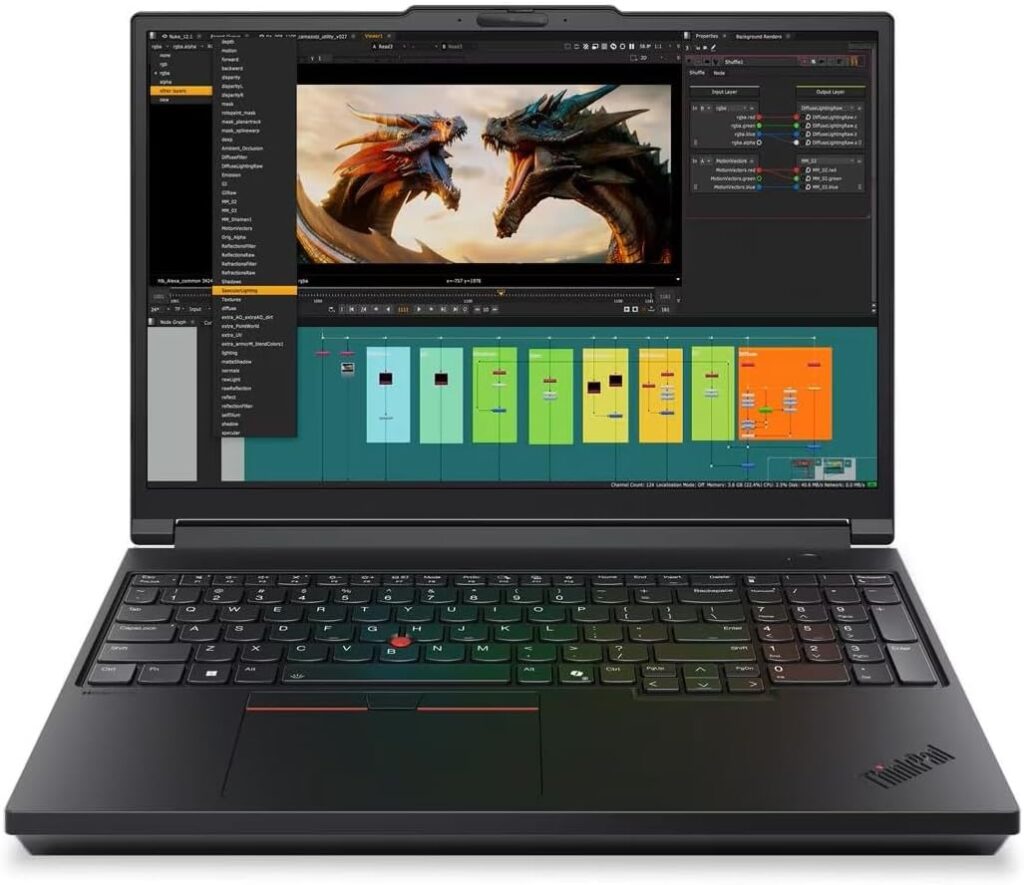
This is the machine I’d point most working engineers toward without much hesitation. Lenovo slimmed the chassis down from the previous generation, kept all four memory slots, and made it the only mainstream mobile workstation you can push to 192GB without a special order.
Specifications
- Processor: Intel Core Ultra 200HX series (Arrow Lake-HX), up to 24 cores, up to 5.5 GHz
- Graphics: Up to NVIDIA RTX PRO 5000 Blackwell Laptop GPU, 24GB GDDR7, 256-bit, roughly 896 GB/s bandwidth
- Memory: Up to 192GB DDR5 across four user-accessible SO-DIMM slots
- Storage: Up to 12TB via three PCIe Gen5 M.2 slots
- Display: 16-inch 16:10, options up to 3.2K OLED touch
- Connectivity: Thunderbolt 5, Thunderbolt 4, HDMI 2.1, 2.5Gb Ethernet, SD reader, Wi-Fi 7, optional 5G
- Battery: 99.9Wh
- Weight: around 2.54 kg (5.6 lb)
- Adapter: 180W
Why it works so well here
The 24GB of GDDR7 is the headline, and it’s not a number you’ll ever saturate with normal Inventor work. That’s the point. Throw a fully shaded 8,000-part model with realistic materials at the viewport and it simply doesn’t blink.
But the four memory slots are the real story. Most 2026 workstations have moved to soldered or CAMM2 memory, which locks you into whatever you bought on day one. The P16 lets you start at 32GB and climb to 192GB three years later when your projects have grown into monsters. On a machine you’re keeping five years, that flexibility is worth actual money.
The keyboard is still the best in the category, which sounds like a footnote until you’ve typed dimension values for six straight hours.
Where it lets you down
Lenovo cut the power adapter from 230W in the previous generation to 180W here. The RTX PRO 5000 Blackwell can pull up to 175W by itself in a chassis that permits it — this one runs it closer to 95W. That means the P16 Gen 3 leaves performance on the table compared to Dell and HP’s flagships using literally the same silicon. You get better portability and battery life in exchange. If you’re buying purely for peak throughput, though, it’s a genuine trade.
| Pros | Cons |
|---|---|
| Up to 192GB across four upgradeable slots | 180W adapter limits sustained GPU output |
| 24GB VRAM handles anything Inventor asks | Heavy, despite not being the fastest here |
| Three Gen5 SSD bays, up to 12TB | Loaded configurations get expensive quickly |
| Outstanding keyboard and serviceability | Fan noise is noticeable under long loads |
| Full Autodesk certification | The 5G option costs more than it should |
Right for you if: this is your full-time job, you want one machine for the next five years, and you’d rather add memory later than replace the whole laptop.
2. HP ZBook Fury G1i 18 — For When Inventor Is Only Half the Job
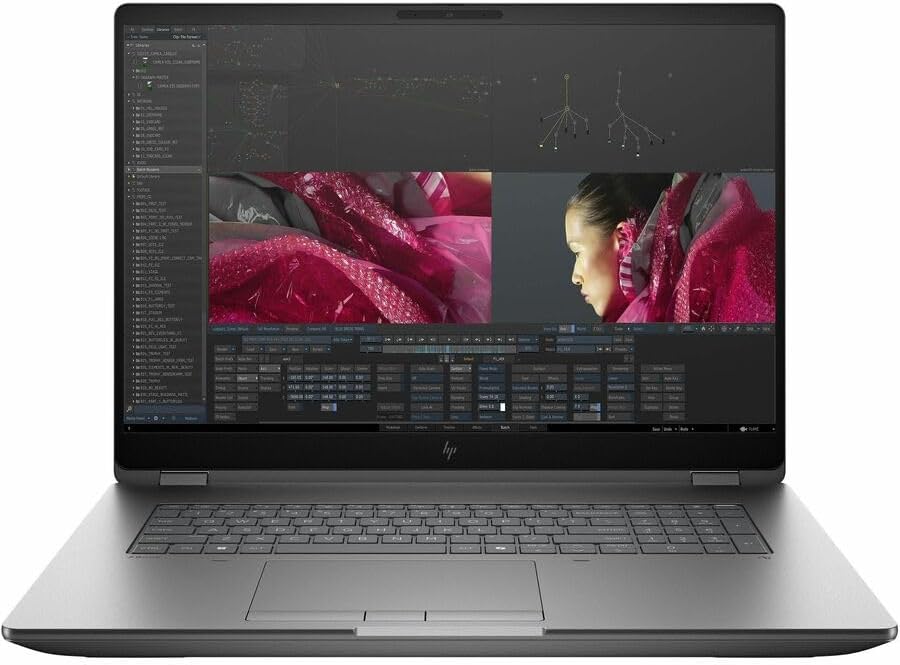
HP built this thing to win and made almost no apologies for what that costs you. Eighteen inches, seriously heavy, enormous power brick. It will also chew through work that makes thinner machines quietly give up after ten minutes.
Specifications
- Processor: Up to Intel Core Ultra 9 285HX, 24 cores
- Graphics: Up to NVIDIA RTX PRO 5000 Blackwell Laptop GPU, 24GB GDDR7, running at roughly 200W
- Memory: Up to 128GB DDR5
- Storage: Four M.2 bays
- Display: 18-inch WQXGA (2560×1600), 500 nits, 100% DCI-P3, 165Hz
- Cooling: Hybrid turbo-bladed triple-fan system
- Keyboard: Per-key RGB with application profiles preloaded for AutoCAD, SolidWorks and Photoshop
- Adapter: 330W
Why it works so well here
This is what you buy when modelling is only part of the picture — when you’re also running Nastran solves, CFD, photorealistic renders, or generative design studies overnight. The 200W GPU ceiling and triple-fan cooling mean it holds its clocks instead of backing off partway through the job.
The 18-inch panel earns its place too. Extra screen space in Inventor is genuinely functional: model browser, ribbon and a drawing view can coexist without endless panel shuffling. And the 165Hz refresh isn’t a gaming gimmick in this context — spinning a large assembly at high refresh is noticeably easier on the eyes over a long day.
That keyboard feature where it lights only the keys relevant to your current application sounds like marketing. It isn’t, especially while you’re still learning shortcuts.
Where it lets you down
Calling it a laptop is generous. It’s a portable desktop. Hauling it to a client site once a week is fine; carrying it daily on public transport is a decision you’ll come to resent. Battery life away from the wall is short, the 330W adapter adds real weight to the bag, and the display tops out at WQXGA with no 4K option. Fully specced, the price gets genuinely uncomfortable.
| Pros | Cons |
|---|---|
| Highest sustained performance in this group | Very heavy, plus a 330W brick |
| Triple-fan cooling holds clocks under long loads | No 4K display option |
| Excellent 18″ 165Hz DCI-P3 panel | Poor battery life for genuine mobile work |
| Four M.2 bays for serious local storage | Top configurations reach eye-watering prices |
| Built for fleet management, fully certified | Overkill if you only model |
Right for you if: the machine mostly lives on a desk, you solve and render regularly, and you want desktop throughput without a tower under it.
3. Dell Pro Max 16 Plus — The Best Balance of the Bunch
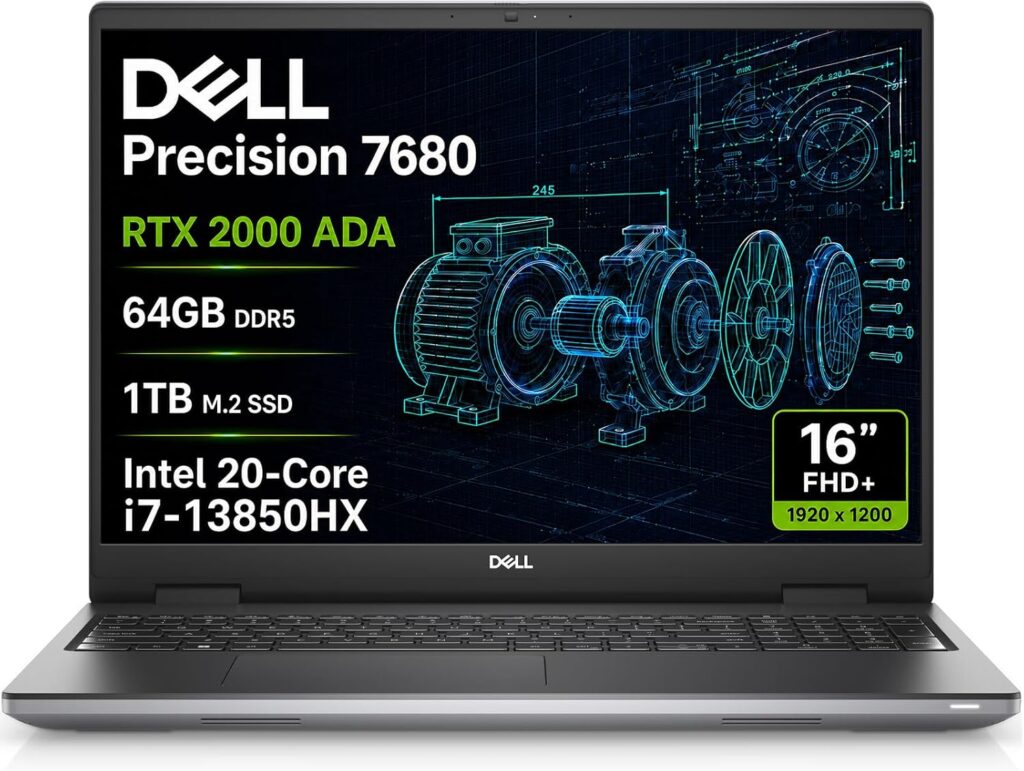
Dell retired the Precision name and replaced it with Pro Max, which caused a fair bit of confusion and some real irritation among long-time buyers. Naming aside, the hardware is excellent. This is the pick for people who want serious performance but still have to carry the thing.
Specifications
- Processor: Intel Core Ultra 200HX series at 55W
- Graphics: Up to NVIDIA RTX PRO 5000 Blackwell Laptop GPU, 24GB GDDR7
- Memory: Up to 256GB using fast CAMM2 modules
- Storage: Multiple M.2 slots with Gen5 support
- Display: 16-inch 16:10, OLED available
- Connectivity: Thunderbolt 5, HDMI, Ethernet, SD reader
- Adapter: 280W
Why it works so well here
Dell found the middle ground properly. The 280W adapter means the GPU isn’t as boxed in as the ThinkPad P16’s, but the 16-inch body still slides into a normal backpack. CAMM2 memory is faster than traditional SO-DIMMs and remains user-replaceable, and the 256GB ceiling is the highest on this list.
The display is the other reason people choose it. That OLED option is the best panel in this comparison — contrast that makes shaded models genuinely pop, colour accuracy that holds up when you’re presenting to a client, and a screen you don’t get tired of after a decade of looking at washed-out laptop panels.
One heads-up while you’re shopping: the Dell Pro Max 16 Premium is a different, thinner machine with a 45W Core Ultra 9 285H and an RTX PRO 3000 Blackwell with 12GB. It’s a lovely entry-level visualisation machine, and those extra four gigabytes over an 8GB card are money well spent. Just don’t mix the two up on a retail page.
Where it lets you down
Independent testing suggests the Pro Max 16 Plus throttles its 175W-capable GPU down to around 125W sustained, and battery life trails HP’s 16-inch Fury in productivity work by a wide margin. It’s still fast. It just doesn’t deliver everything that 280W adapter implies.
| Pros | Cons |
|---|---|
| Best display here, especially the OLED | Sustained GPU power below what the spec suggests |
| Up to 256GB via fast CAMM2 memory | Battery life trails its closest rival |
| 280W adapter allows real sustained output | Plus versus Premium naming is confusing |
| Genuinely portable for a full workstation | CAMM2 upgrade modules aren’t cheap |
| Excellent build and out-of-box experience | Fewer storage bays than the ZBook Fury |
Right for you if: you want the best screen in the category, you actually carry your laptop, and you’re not prepared to give up top-tier GPU options to get there.
4. Lenovo ThinkPad P1 Gen 8 — Around Four Pounds, Still Certified
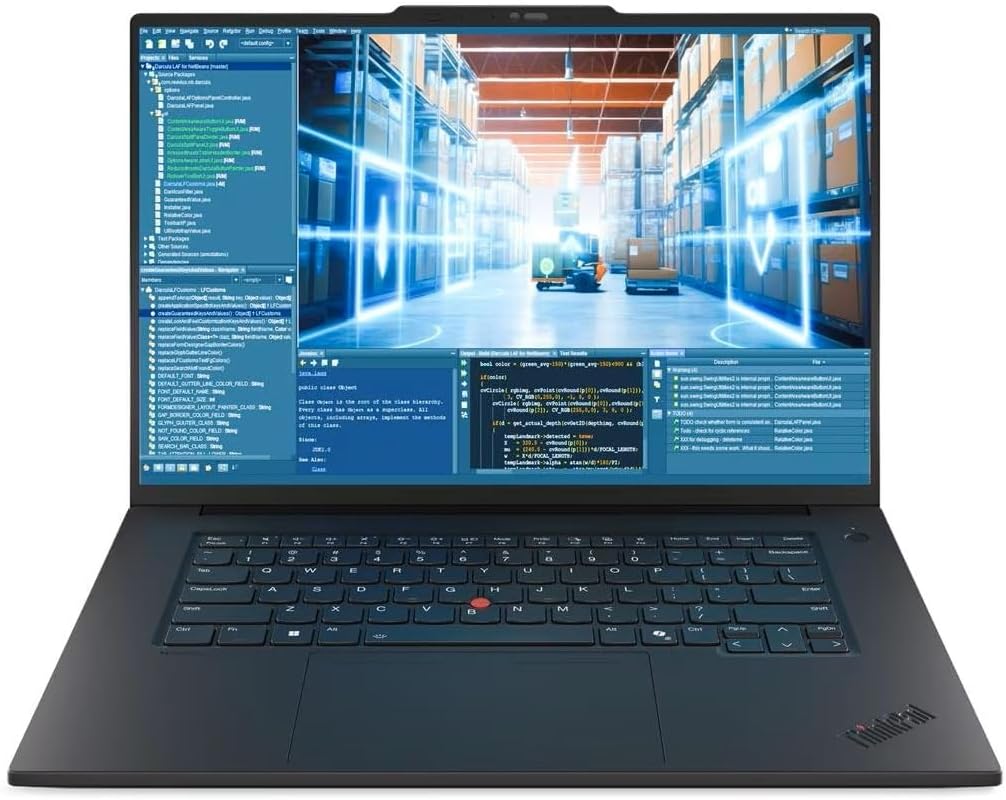
Roughly 1.8 kg and it still carries full certification. The P1 Gen 8 is what you buy when the laptop goes everywhere with you and Inventor is a big part of the job but not the whole job.
Specifications
- Processor: Intel Core Ultra 7 255H, Core Ultra 7 265H vPro, or Core Ultra 9 285H (H-series, not HX)
- Graphics: NVIDIA RTX PRO 1000 Blackwell or RTX PRO 2000 Blackwell, both 8GB GDDR7
- Memory: 16GB, 32GB or 64GB LPDDR5X-7467 via user-replaceable CAMM2
- Storage: Two M.2 2280 slots
- Display: 16-inch — WUXGA IPS 500-nit low-power, 3.2K OLED up to 120Hz, or 3840×2400 at 800 nits
- Battery: 90Wh
- Weight: around 1.8 kg (4 lb)
- Wireless: Wi-Fi 7
Why it works so well here
The RTX PRO 2000 Blackwell lands roughly where a previous-generation GeForce RTX 4060 sits for graphics work — which is plenty for parts, drawings and assemblies in the low thousands. Pair it with 64GB of memory and you’ve got a machine handling real professional work while weighing less than most 15-inch consumer laptops.
CAMM2 is the quiet hero. It’s smaller and faster than SO-DIMM but, unlike the soldered memory in nearly every thin laptop, you can swap it later. That’s rare at this weight and it meaningfully extends how long the machine stays relevant.
The 3.2K OLED is beautiful. The low-power WUXGA panel is the one to pick if battery life matters more to you than pixel count.
Where it lets you down
The H-series processor is the compromise, and it’s a real one. Against the HX chips in the P16 and ZBook Fury, expect noticeably lower single-core and multi-core performance — and single-core is precisely what Inventor cares about most. You’ll feel it on bigger assembly rebuilds.
The 8GB VRAM ceiling is the other limit. Fine for most work, but heavy textures or very large shaded assemblies will find the wall. List pricing is also steep, though Lenovo discounts this machine constantly, sometimes by more than half. Never pay list price for a ThinkPad. Ever.
| Pros | Cons |
|---|---|
| Around 1.8 kg with full certification | H-series CPU is slower than HX rivals |
| Upgradeable CAMM2 memory to 64GB | Graphics cap at 8GB VRAM |
| Superb display choices including 3.2K OLED | 64GB memory ceiling limits big-assembly work |
| Excellent keyboard and build quality | List pricing is unreasonable — wait for a sale |
| Strong battery life for a workstation | Only two M.2 slots |
Right for you if: you’re on site, in client offices or on planes regularly, and your assemblies are moderate rather than monstrous.
5. MSI Vector 16 HX AI — The Honest Answer for Students
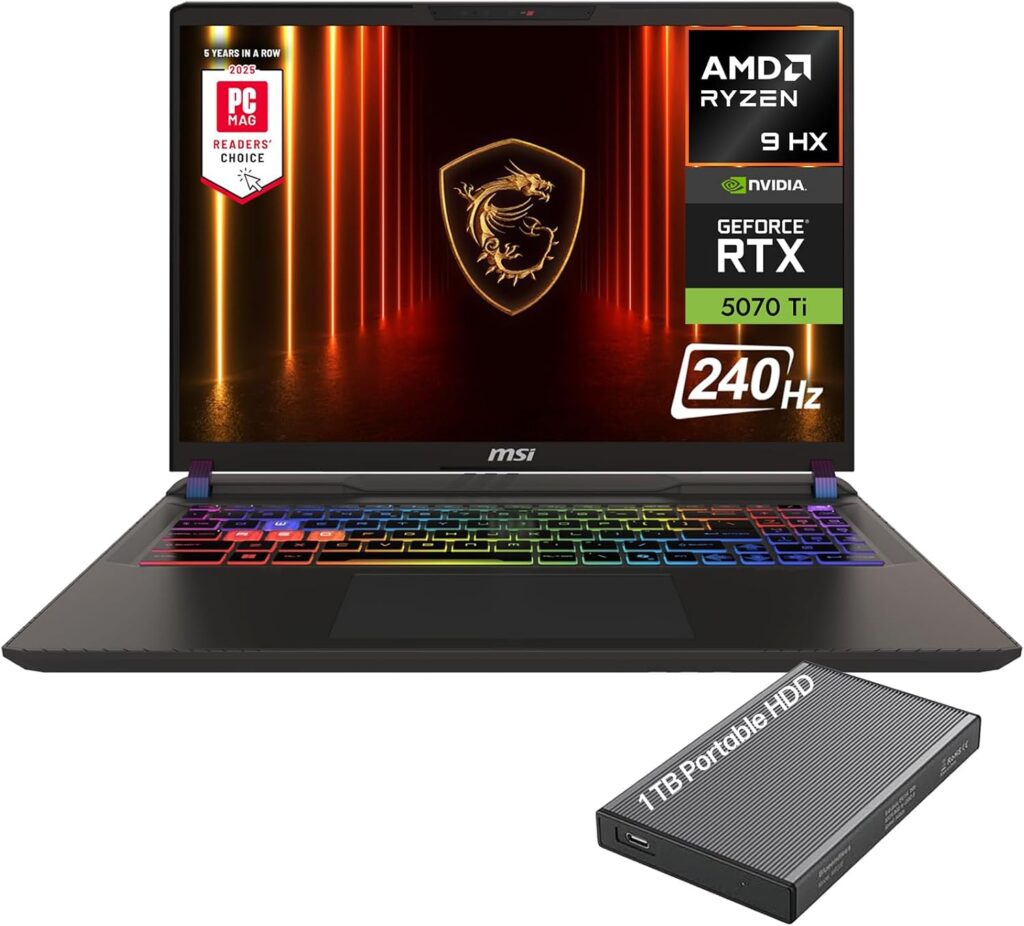
Let’s be straight about who this is for. If you’re an engineering student, Inventor is free through Autodesk’s education programme and you do not have $3,000 for a laptop. You need something that runs Inventor properly, handles the rest of your coursework, and doesn’t require financing.
This is that machine.
Specifications
- Processor: Intel Core Ultra 9 275HX, 24 cores, HX-class clocks
- Graphics: NVIDIA GeForce RTX 5070 Ti Laptop GPU, 12GB GDDR7, up to 150W
- Memory: 16GB DDR5 as standard, upgradeable via SO-DIMM
- Storage: M.2 NVMe, expandable
- Display: 16-inch QHD+ (2560×1600) at 240Hz
- Connectivity: Thunderbolt 5
- Price: around $1,499
Why it works so well here
That Core Ultra 9 275HX is the whole argument. It’s an HX-class chip with high boost clocks — exactly the profile Inventor rewards — at a price where competitors are still shipping slower H-series parts. For sketching, constraining and rebuilding, it punches enormously above its bracket.
The RTX 5070 Ti brings 12GB of GDDR7, which is more video memory than the RTX PRO 2000 Blackwell in laptops costing twice as much. It’s not certified, and that genuinely matters in a production environment. But for coursework, personal projects and freelance work where you’re your own IT department, it’s the smarter place to put your money. It also plays games extremely well, which isn’t a trivial consideration when this has to be your only computer.
Thunderbolt 5 at this price is unusual and properly useful — it means a single-cable dock at your desk actually works, with the bandwidth for external displays and fast storage.
Where it lets you down
The 16GB base configuration is the catch, and you should treat the upgrade as part of the purchase price rather than an optional extra. Buy a 32GB or 64GB SO-DIMM kit and swap it before you install Inventor. It’s usually $100 to $200, takes about fifteen minutes, and transforms the machine.
Wi-Fi 6E rather than Wi-Fi 7 is a minor miss. The lack of certification is the real trade — if your employer requires certified hardware, none of the above matters.
| Pros | Cons |
|---|---|
| HX-class chip with the clocks Inventor loves | 16GB base — budget for an upgrade immediately |
| 12GB VRAM, more than pricier pro options | No Autodesk certification |
| Thunderbolt 5 at a mid-range price | Wi-Fi 6E rather than Wi-Fi 7 |
| Excellent 240Hz QHD+ panel | Gaming aesthetics won’t suit every office |
| Roughly a third the price of certified rivals | Mediocre battery life under load |
Right for you if: the money comes out of your own pocket rather than a company budget.
Side-by-Side Comparison
| ThinkPad P16 Gen 3 | ZBook Fury G1i 18 | Dell Pro Max 16 Plus | ThinkPad P1 Gen 8 | MSI Vector 16 HX AI | |
|---|---|---|---|---|---|
| CPU class | Core Ultra 200HX | Core Ultra 9 285HX | Core Ultra 200HX, 55W | Core Ultra H-series | Core Ultra 9 275HX |
| Top GPU | RTX PRO 5000, 24GB | RTX PRO 5000, 24GB | RTX PRO 5000, 24GB | RTX PRO 2000, 8GB | RTX 5070 Ti, 12GB |
| Max memory | 192GB (4 slots) | 128GB | 256GB (CAMM2) | 64GB (CAMM2) | 64GB+ (SO-DIMM) |
| Display | 16″, up to 3.2K OLED | 18″ WQXGA 165Hz | 16″ OLED option | 16″, up to 3.2K OLED | 16″ QHD+ 240Hz |
| Adapter | 180W | 330W | 280W | ~170W | ~280W |
| Weight | ~2.54 kg | Heaviest here | Middle | ~1.8 kg | ~2.7 kg |
| Autodesk certified | Yes | Yes | Yes | Yes | No |
| Memory upgradeable | Yes, four slots | Yes | Yes | Yes | Yes |
| Strongest trait | Memory ceiling | Sustained power | Display and balance | Weight | Price |
| Weakest trait | Power limited | Portability | GPU throttling | CPU class | No certification |
Matching a Machine to Your Actual Work
| What You Do Most Days | What to Buy | Minimum Memory |
|---|---|---|
| Learning Inventor, coursework, small assemblies | MSI Vector 16 HX AI | 32GB |
| Freelance design, under 1,000 parts | ThinkPad P1 Gen 8 | 32GB |
| Full-time professional, mixed assembly sizes | ThinkPad P16 Gen 3 | 64GB |
| Assemblies over 5,000 parts, machine design | ThinkPad P16 Gen 3 or Dell Pro Max 16 Plus | 64–96GB |
| Nastran, FEA, CFD, overnight rendering | HP ZBook Fury G1i 18 | 128GB+ |
| Constant travel and client presentations | ThinkPad P1 Gen 8 or Dell Pro Max 16 Plus | 32–64GB |
Three More Worth Knowing About
Lenovo ThinkPad P16v Gen 3 — The sensible middle option. Core Ultra 9 285H, RTX PRO 2000 Blackwell, up to 96GB of memory, around 2.1 kg, starting near $2,329 and frequently discounted well under $2,000. It’s mid-tier at everything and best at nothing, which is precisely the design brief. Lenovo trimmed some corners on chassis materials and cooling next to the flagship, but maintenance access is excellent and battery life is strong. If the P16 Gen 3 is out of reach, look here before anywhere else.
HP ZBook X G2i — New for 2026 and notable for putting an RTX PRO 3000 Blackwell with 12GB into a 16-inch body, with support for up to 128GB of memory. That 12GB is a meaningful step above the 8GB cards that dominate this price tier, and it sits below the Fury and Ultra models on cost. Worth a proper look if you want certified hardware with real video memory headroom without paying flagship prices.
A note on MacBooks — Inventor doesn’t run natively on macOS. Not partially, not with a workaround that’s worth the hassle. You’d need virtualisation or a cloud workstation, both of which add cost, complexity and support headaches. Apple’s silicon is genuinely brilliant; it’s just the wrong tool for this particular job.
Mistakes That Cost People Real Money
Chasing core count over clock speed. A 24-core chip that tops out at 4.8 GHz will feel slower in the viewport than a 16-core one hitting 5.4 GHz. Boost clock first.
Buying 16GB and promising yourself you’ll upgrade later. Sometimes you can’t — plenty of thin workstations solder their memory in place. Confirm it’s upgradeable before you buy. If it isn’t, buy what you’ll need in year three.
Paying for 4K when a brighter WQXGA panel would serve you better. Windows scaling plus Inventor’s older dialog boxes doesn’t always end well. Try it before committing if you can.
Ignoring the adapter wattage. Same chips, wildly different sustained performance. The power brick tells you which machine is which.
Assuming a professional GPU is automatically faster. Often it isn’t in raw terms. You’re paying for certification, validated drivers and support — real value inside a firm, much less so for a student.
Paying list price for a ThinkPad. Lenovo discounts constantly, sometimes past 50%. Set an alert and wait a fortnight.
Speed You Can Get for Free
Before you spend a penny, spend twenty minutes. These changes frequently do more than a hardware upgrade would:
- Turn on Express Mode for large assemblies. It defers loading full model data and it’s the single biggest win on anything with thousands of components.
- Use Level of Detail representations so you’re only loading the part of the assembly you’re actually working on.
- Enable hardware acceleration under Application Options → Hardware, and confirm you’re not quietly running on integrated graphics.
- Force Inventor onto the discrete GPU in Windows Graphics Settings. This is a shockingly common cause of “my expensive laptop is slow.”
- Switch off shadows, reflections and ray tracing while you’re modelling. Turn them back on for presentations.
- Work locally, not from a network drive. Network latency destroys assembly load times. Use Vault or proper sync instead.
- Install the certified driver branch rather than the newest gaming driver if you’ve got a professional GPU. Those builds are validated against Inventor releases.
- Set Windows to High Performance and switch off any laptop power-saving mode that caps boost clocks.
Common Questions
How much memory do I actually need for Inventor? 32GB is the honest answer for most professionals. 16GB is workable if your assemblies stay under 500 parts. Go to 64GB if you regularly handle large assemblies or run Inventor alongside other software, and 128GB or more if you’re solving in Nastran or CFD.
Do I need a professional GPU, or is GeForce fine? GeForce will run Inventor well. What you give up is certification, validated drivers and a clean support path when something breaks. In a professional or enterprise setting, get certified hardware. As a student or freelancer, a GeForce card gives you far more performance per pound.
Is more VRAM always better? Up to a point. 8GB is the comfortable minimum in 2026 and covers most assemblies. 12GB gives you headroom for heavily shaded models and rendering. Past 16GB you’re mostly buying capacity for simulation and GPU-accelerated rendering rather than everyday modelling.
Can I run Inventor on a Mac? Not natively. It’s Windows-only. Virtualisation and cloud workstations exist but add cost and complications. Buy Windows hardware if Inventor is central to your work.
Is a gaming laptop good enough? Yes, and for a lot of people it’s the right financial call. Gaming laptops often carry HX-class processors with exactly the high clocks Inventor rewards. The trade-offs are no certification, weaker battery life, and a look that may not fit a professional setting.
Why does my laptop still feel slow despite good specs? Usually one of three things: Inventor is running on integrated graphics, you’re out of memory and Windows is swapping to disk, or you’re working from a network drive. Check all three before you blame the hardware.
How long should a mobile workstation last? Four to five years if you buy sensibly. The limiting factor is nearly always memory, not the processor. A machine with upgradeable RAM stays useful far longer than one with soldered memory, however fast the chip was at launch.
What changes if I’m doing simulation? Core count finally starts to matter. Solving and rendering scale across cores in a way that modelling simply doesn’t. If solving is a regular part of your week, prioritise a 24-core HX chip and a chassis with the cooling to sustain it — which is exactly the ZBook Fury’s pitch.
Do I really need a 4K screen? Autodesk recommends it and more screen space genuinely helps. But a bright, accurate 2560×1600 panel at 16 inches is often the better daily choice, particularly given how Windows scaling treats Inventor’s interface.
Is a SpaceMouse worth the money? For anyone spending hours a day in Inventor, yes. It’s probably the best return per pound of anything mentioned in this guide.
The Verdict
If you remember one thing from all of this: buy the highest boost clock you can afford, fill the machine with as much memory as it will take, and don’t let anyone sell you a spec that doesn’t match how you actually work.
- Most professionals should buy the Lenovo ThinkPad P16 Gen 3. The 192GB ceiling across four upgradeable slots makes it the machine that ages best, and the RTX PRO 5000 handles everything Inventor asks. It’s power-limited next to its rivals, but for modelling work you’ll rarely notice.
- If you solve and render, buy the HP ZBook Fury G1i 18. Nothing else here sustains performance like it. Just accept that it’s a portable desktop, not a travel companion.
- If you want the best all-rounder with a beautiful screen, buy the Dell Pro Max 16 Plus. Best display of the five, genuinely portable, highest memory ceiling on paper.
- If you live out of a backpack, buy the ThinkPad P1 Gen 8. Wait for a sale, and be honest with yourself about how big your assemblies really get.
- If you’re a student or freelancer, buy the MSI Vector 16 HX AI and upgrade the memory on day one. You’ll get most of the experience for a fraction of the money.
And before you spend anything at all — go and check that Inventor is actually using your discrete GPU, and switch Express Mode on. Two settings. More often than you’d think, that’s the entire problem.

Hi, my name is Burak. I am a mechanical engineer. I have been writing laptop reviews for the Engineering Laptops website since 2020. Please feel free to contact me if you have any questions.