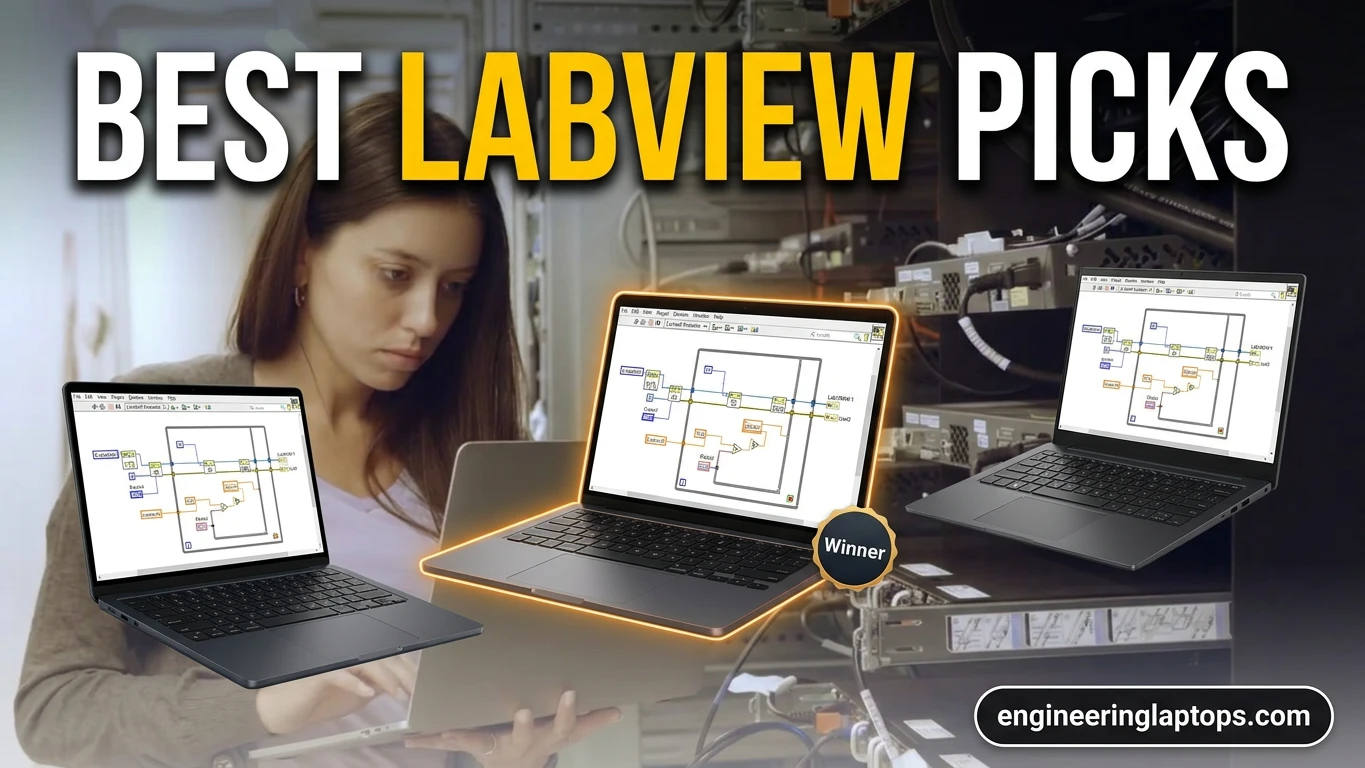
Estimated reading time: 20 minutes
Key Takeaways
- Choosing the right laptop for LabVIEW requires understanding its unique performance needs, such as single-core speed, RAM, and storage.
- LabVIEW’s official system requirements are deceptively low; real-world performance demands significantly more resources.
- Prioritize laptops with high single-core speeds, at least 32 GB of RAM, and fast SSDs for optimal performance.
- USB-A ports, efficient Thunderbolt connectivity, and solid build quality are critical for hardware compatibility and reliability.
- The best laptops for LabVIEW in 2026 include the Lenovo ThinkPad P1 Gen 8 and Dell Pro Max 16 Plus, tailored to different user needs.
Table of contents
- Why LabVIEW Is Not Like Other Engineering Software
- The Mac Question, Settled Once and for All
- Quick Comparison: My 5 Picks at a Glance
- Best Laptops for LabVIEW in 2026
- A Word About FPGA Compiles (Plan Your Workflow, Not Just Your Laptop)
- Mistakes I See People Make (Learn From Others’ Pain)
- So Which One Should You Buy?
- Frequently Asked Questions
I’ve been building test and measurement systems with LabVIEW for a long time now, and if there’s one question I get asked more than any other, it’s this: “What laptop should I buy for LabVIEW?”
And every single time, I watch people make the same mistake. They open up some generic “best laptops for engineers” list, pick whatever has the biggest GPU and the flashiest benchmark scores, and then wonder why their FPGA compiles still crawl or why their USB DAQ device keeps dropping out mid-acquisition.
Here’s the truth nobody tells you: LabVIEW is a weird application. It doesn’t behave like SolidWorks, it doesn’t behave like ANSYS, and it definitely doesn’t behave like a video editor. Buying a laptop for LabVIEW by gaming-laptop logic is like buying a pickup truck because you heard trucks are good — without checking whether you actually need to tow anything.
So in this guide, I’m going to walk you through what genuinely matters for LabVIEW performance in 2026, then give you my five picks — the machines I’d actually spend my own money on. No filler, no affiliate-driven nonsense, just what works on a real test bench.
Why LabVIEW Is Not Like Other Engineering Software
Let’s get something out of the way first, because it surprises everyone: LabVIEW’s official system requirements are almost laughably low. National Instruments lists something in the neighborhood of 1 GB of RAM and a few gigabytes of disk space for the development environment. On paper, a ten-year-old office laptop could run it.
But the official minimums and reality live on different planets. Once you install NI-DAQmx, device drivers, the FPGA module, the Real-Time module, and a couple of toolkits, your install balloons past 20 GB. Once you start streaming data from a cDAQ chassis at high sample rates, that 1 GB of RAM becomes a joke. And once you kick off your first FPGA compile, you’ll understand why experienced LabVIEW developers get very picky about one specific spec that most laptop reviews barely mention.
Let me break down what actually moves the needle.
Single-Core Speed Beats Core Count (Yes, Really)
This is the big one, and it goes against everything the laptop industry has been telling you for the past decade.
If you use the LabVIEW FPGA Module, the actual compilation work is done by AMD’s (formerly Xilinx) toolchain running under the hood. And that toolchain is, for the most part, single-threaded. It doesn’t matter if your laptop has 24 cores — the bitfile generation process is going to hammer one core and mostly ignore the rest.
What does that mean in practice? A CPU that boosts to 5.5 GHz on a single core will finish your compile noticeably faster than a CPU with twice the cores but a 4.8 GHz ceiling. When your compiles take 45 minutes to 2 hours (and if you’ve done serious FPGA work, you know they do), that difference adds up to real hours of your life every week.
Now, before you conclude that core count is useless — it isn’t. LabVIEW’s dataflow model automatically spreads independent loops across cores. If you’re running three acquisition loops, a processing loop, and a UI loop at the same time, extra cores genuinely help. And if you run test executive software alongside your development environment, more cores keep everything smooth.
The takeaway: you want both, but if you have to choose, prioritize high boost clocks.
RAM Is Where FPGA Compiles Go to Die
Here’s a fun way to ruin your afternoon: kick off a large FPGA compile on a machine with 16 GB of RAM and watch the compiler start paging to disk. Compile times don’t just get slower — they can multiply, and in ugly cases the compile just gives up entirely.
Memory starvation is the single most destructive thing that can happen to a compile job. NI’s own guidance for heavy firmware compilation and large-scale data processing points toward 32 GB as a realistic working floor, and honestly, for anything serious in 2026, I’d call 32 GB the minimum and 64 GB the comfortable zone.
There’s a second reason RAM matters that has nothing to do with FPGA: data acquisition. If you’re streaming multiple channels at high sample rates and buffering in memory before logging, big datasets eat RAM fast. If your in-memory datasets regularly push past 16 GB, don’t even think about it — go straight to 64 GB.
A Fast SSD Is Criminally Underrated
Talk to veteran LabVIEW developers and a pattern emerges: a huge chunk of what people perceive as “LabVIEW being slow” is actually disk bottlenecking. Loading large projects, opening classes with hundreds of VIs, mass compiles, logging TDMS files at speed — all of it leans hard on storage.
Any laptop you consider in 2026 should have a fast PCIe Gen4 (or Gen5) NVMe drive, and I’d treat 1 TB as the practical minimum. Between LabVIEW itself, drivers, toolkits, multiple LabVIEW versions living side by side (you know it happens), and gigabytes of logged test data, 512 GB fills up embarrassingly fast.
Ports Are the Whole Point
This is where LabVIEW laptops part ways with every generic laptop recommendation on the internet.
You are going to plug hardware into this machine. USB multifunction DAQ boxes. A myRIO. A cDAQ chassis. Maybe a GPIB-USB adapter talking to some instrument older than your career. Maybe a PXIe chassis over Thunderbolt. This isn’t a laptop that lives in a coffee shop — it lives on a bench with cables hanging off it.
So here’s what to look for:
- Native USB-A ports. A surprising amount of NI hardware still ships with USB-A connectors, and while dongles work, every adapter in the chain is one more thing that can flake out during an overnight test run. Engineers who’ve been burned by an unreliable USB connection at hour six of an eight-hour acquisition get religious about solid, native ports.
- Thunderbolt, and good Thunderbolt. If you connect to a PXIe chassis via Thunderbolt/MXI, know that not every laptop handles PCIe enumeration over Thunderbolt gracefully. There are documented cases of workstation laptops refusing to properly enumerate cards in a PXIe chassis. If Thunderbolt-to-PXI is mission-critical for you, test your exact chassis-and-laptop combo before committing, and lean toward business-class machines with mature firmware.
- Ethernet is a bonus. Real-time targets, networked instruments, LXI devices — a native RJ45 port saves you yet another dongle.
The GPU Myth
Let me save you a thousand dollars: LabVIEW does not use your GPU. Core LabVIEW development, DAQ, FPGA compilation — none of it touches the graphics card in any meaningful way.
The only reasons to spend on a discrete GPU are if you also run vision processing, machine learning toolkits, CUDA-accelerated analysis, or other GPU-hungry software alongside LabVIEW. If your work is acquisition, control, and test automation, take the money you’d have spent on an RTX 5000-class GPU and put it into RAM and a better CPU instead. You’ll feel that upgrade every single day.
The Mac Question, Settled Once and for All
I get this question constantly, so let’s kill it properly: do not buy a Mac for LabVIEW if you connect to physical NI hardware. Here’s the accurate situation in 2026:
- The last commercial LabVIEW release for macOS was back in 2023. Since then, LabVIEW ships for Windows and Linux only. There’s a free Community Edition on macOS for non-commercial tinkering, and that’s it.
- Even more importantly: NI’s hardware drivers — DAQmx, GPIB, the stuff that makes LabVIEW actually useful — do not support Apple Silicon. No drivers means no instruments, full stop.
- The workaround is running Windows in a virtual machine like Parallels, which works fine for pure software development. But USB passthrough for DAQ devices is fragile, and I wouldn’t trust a critical acquisition to it.
There’s one legitimate Mac scenario, and I’ll cover it in the picks below. But for 95% of LabVIEW users, this is a Windows conversation.
Quick Comparison: My 5 Picks at a Glance
| Laptop | Best For | Top CPU | Max RAM | RAM Upgradeable? | USB-A? | Weight | Starting Price |
|---|---|---|---|---|---|---|---|
| Lenovo ThinkPad P1 Gen 8 | Most people (best overall) | Core Ultra 9 285H | 64 GB | Yes (CAMM2) | No | ~1.8 kg | ~$1,699 |
| Dell Pro Max 16 Plus | Maximum raw power | Core Ultra 9 285HX | 128 GB | Yes (CAMM2) | Yes | ~2.3 kg | ~$2,779 |
| HP ZBook Fury G1i 16 | Benchtop monster rigs | Core Ultra 9 285HX | 256 GB | Yes | Yes | ~2.5 kg | ~$3,000+ |
| ASUS ProArt P16 | Portability + value | Ryzen AI 9 HX 370 | 64 GB | No (soldered) | Yes (x2) | ~1.95 kg | ~$1,899 |
| MacBook Pro (M5 Pro) | VM/remote workflows only | Apple M5 Pro | 128 GB | No | No | 1.6–2.1 kg | ~$2,199 |
Now let’s dig into each one.
Best Laptops for LabVIEW in 2026
1. Lenovo ThinkPad P1 Gen 8 — The One I’d Buy
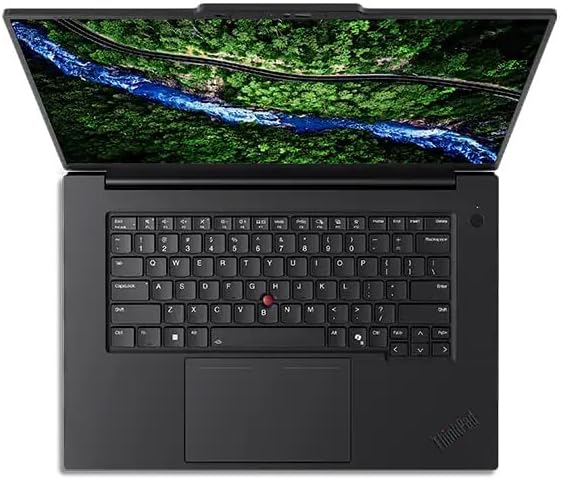
If a colleague cornered me tomorrow and demanded a single answer, this is it. The ThinkPad P1 Gen 8 nails the balance that LabVIEW work actually demands: serious performance, workstation-grade reliability, and a body you can carry between the lab and a customer site without dreading it.
Key specs:
- CPU: Intel Core Ultra 7 255H / 265H or Core Ultra 9 285H (16 cores, boost up to 5.4 GHz)
- GPU: Intel Arc integrated, or NVIDIA RTX Pro 1000 / RTX Pro 2000 (8 GB GDDR7)
- RAM: 16 / 32 / 64 GB LPDDR5x — on user-upgradeable CAMM2 modules, which is genuinely rare in 2026
- Storage: Dual M.2 slots, PCIe Gen4/Gen5, up to 8 TB total
- Display: 16″ options from WUXGA IPS up to a gorgeous 3.2K 120 Hz OLED
- Ports: 2x Thunderbolt 5, 1x Thunderbolt 4, HDMI 2.1, SD Express reader
- Weight: About 1.8 kg
Why it works for LabVIEW: The Core Ultra 9’s 5.4 GHz single-core boost chews through FPGA compiles, and the CAMM2 memory means you can buy 32 GB today and jump to 64 GB when your projects grow — no crystal ball required at purchase time. Thunderbolt 5 gives you a clean path to PXIe chassis, and ThinkPads have earned their reputation among test engineers for two boring but priceless qualities: stable firmware and minimal preinstalled junk. When a laptop’s job is to babysit hardware through overnight test runs, boring reliability is a feature.
It’s also ISV-certified, which is corporate-speak for “professional software vendors have actually validated their tools on this machine.” That certification exists for exactly the kind of software we’re talking about.
Pros:
- Upgradeable CAMM2 RAM and two M.2 slots — a rarity worth celebrating
- High single-core boost, great for FPGA compile times
- Thunderbolt 5, excellent keyboard, ISV certification
- Light enough (1.8 kg) to actually travel with
Cons:
- No native USB-A port — you will need a hub or dock for older NI USB hardware, and that annoys me every time
- The H-class chip trails Intel’s HX-class in heavy multi-core workloads
- Price climbs quickly once you start ticking upgrade boxes
2. Dell Pro Max 16 Plus — When You Want All the Power
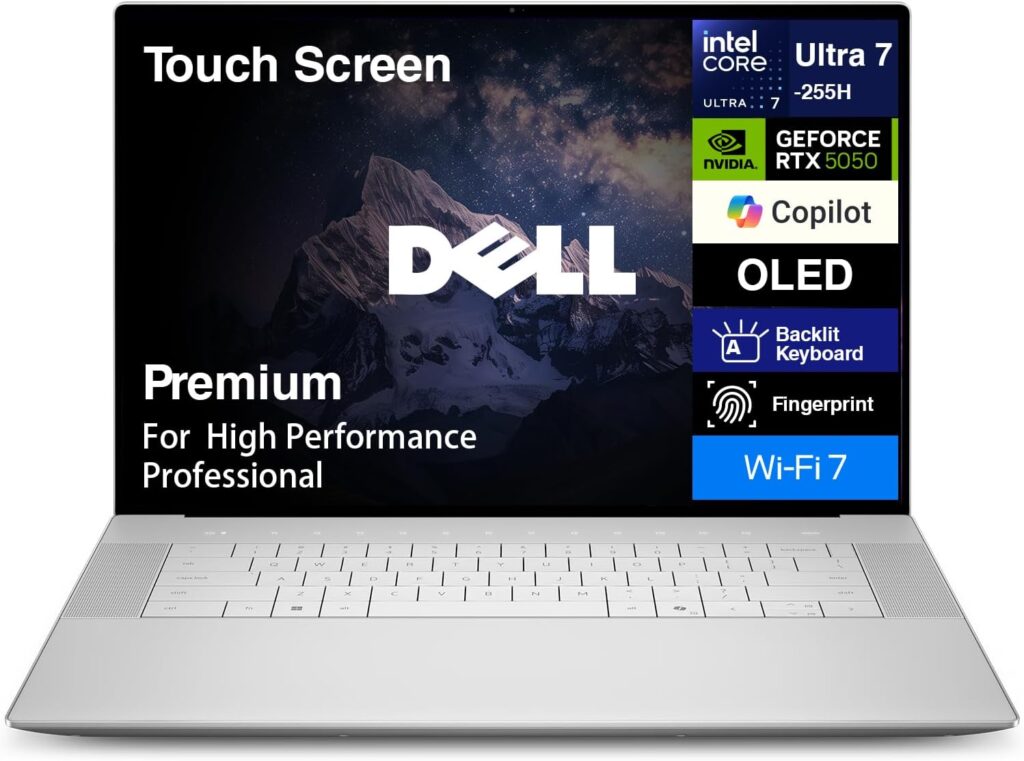
Dell retired the legendary Precision name, and the Pro Max 16 Plus is what stepped into its shoes. If your daily reality is heavy parallel test benches, monster datasets, and local FPGA compiles stacked back to back, this is the machine that never asks you to compromise.
Key specs:
- CPU: Up to Intel Core Ultra 9 285HX — 24 cores, boosting to 5.5 GHz, one of the fastest mobile chips ever made
- GPU: Options up to NVIDIA RTX Pro 5000 (24 GB GDDR7)
- RAM: Up to 128 GB, on upgradeable CAMM2
- Storage: Up to three M.2 slots
- Display: 16″ panels up to 4K 120 Hz OLED
- Ports: 2x Thunderbolt 5, 1x Thunderbolt 4, two native USB-A ports, HDMI 2.1, and a real 2.5 GbE Ethernet jack
- Weight: Around 2.3 kg
Why it works for LabVIEW: That 5.5 GHz boost clock is the best FPGA compile speed you can get in a laptop right now, and 24 cores mean your parallel loops, analysis, and test executive all run without elbowing each other. But honestly, the port selection is what wins my heart here: native USB-A for legacy DAQ boxes, real Ethernet for real-time targets, and dual Thunderbolt 5 for PXIe. This is the only pick on this list where you might never touch a dongle. For a test engineer, that’s poetry.
Pros:
- Fastest compile clocks and highest core count in this roundup
- The best port selection here — USB-A, Ethernet, and Thunderbolt 5, all native
- 128 GB RAM ceiling with upgradeable CAMM2 modules
- Stunning 4K OLED option for staring at block diagrams all day
Cons:
- Heavy, and battery life under load is nothing to write home about
- Genuinely expensive, especially with the big GPU options
- If you don’t do local FPGA compiles or GPU work, most of this power (and money) goes to waste
3. HP ZBook Fury G1i 16 — The Benchtop Beast
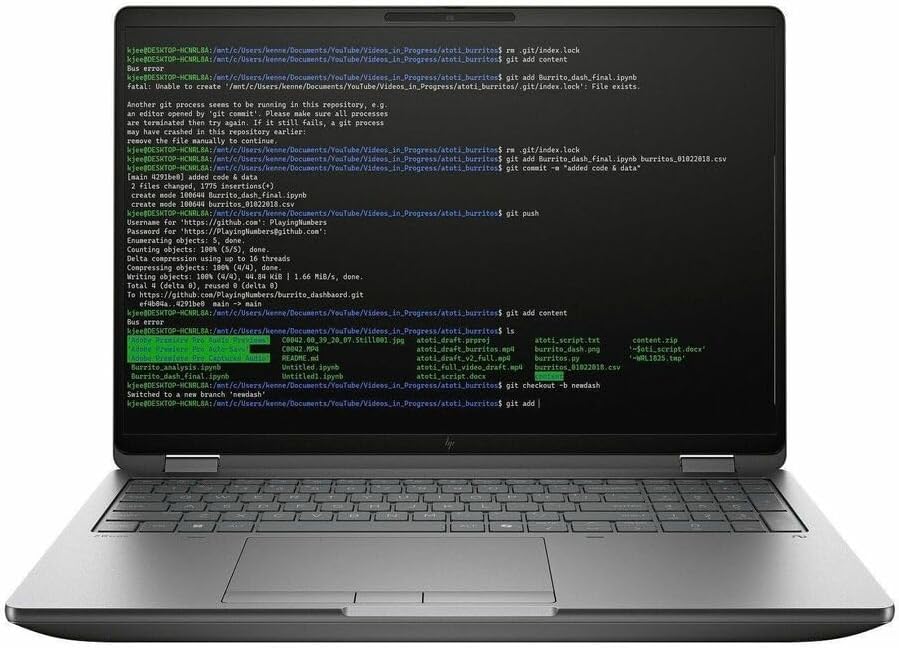
Some laptops travel. The ZBook Fury doesn’t really want to. This is a desktop replacement that happens to close, and for a certain kind of LabVIEW user — the one building a permanent lab rig that logs terabytes and never leaves the bench — it’s exactly right.
Key specs:
- CPU: Up to Intel Core Ultra 9 285HX (24 cores)
- GPU: Up to NVIDIA RTX Pro 5000 (24 GB)
- RAM: Up to a frankly absurd 256 GB, in accessible slots
- Storage: Up to 16 TB
- Display: 16″ options up to a 4K 120 Hz DreamColor panel with excellent color accuracy
- Ports: 2x Thunderbolt 5, Thunderbolt 4, native USB-A, HDMI 2.1, SD Express, RJ45 Ethernet
- Weight: 2.5 kg and up — you’ll feel it
Why it works for LabVIEW: Two numbers tell the story: 256 GB and 16 TB. If you’re buffering enormous multi-channel acquisitions in memory, or logging days of continuous high-rate data locally, no other laptop here comes close. HP also designed it for tool-free servicing, which matters more than people think — lab equipment lives for years, and being able to pop it open to swap RAM or drives without a screwdriver ceremony keeps it useful long after flashier machines get retired. Full port array, ISV certification, the works.
Pros:
- Unmatched RAM (256 GB) and storage (16 TB) ceilings
- Tool-free serviceability — a gift to future you
- Complete port selection including native USB-A and Ethernet
- Built like lab equipment, because that’s what it is
Cons:
- Heavy and bulky; calling it “portable” is generous
- Reviews suggest it can trail Dell’s equivalent in some performance tests
- High configurations get eye-wateringly expensive
4. ASUS ProArt P16 — The One You Actually Carry
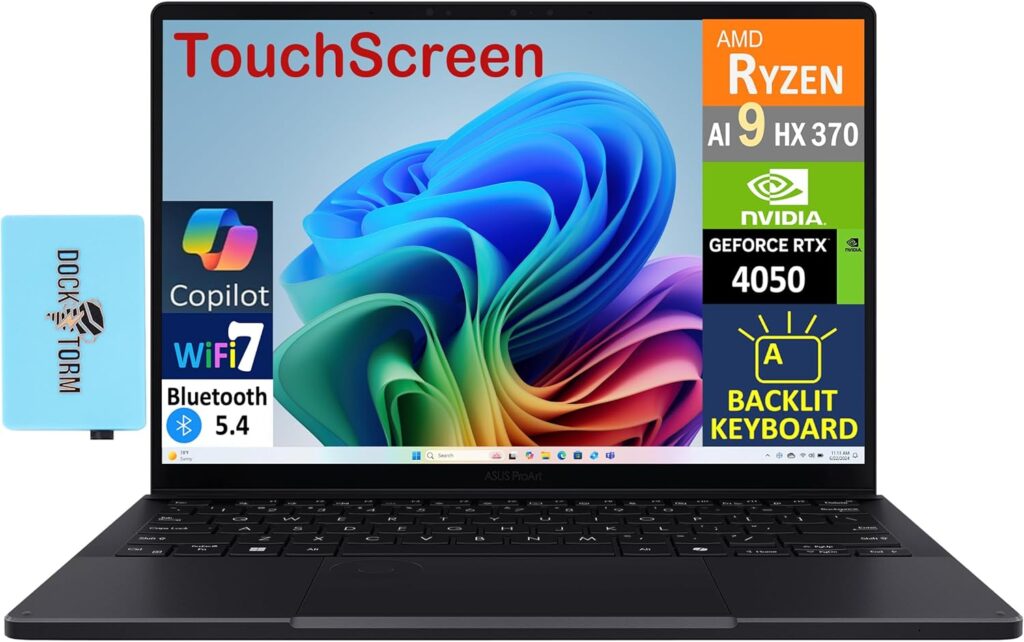
Not everyone needs a 2.5-kilogram slab of workstation. Field engineers, students, consultants bouncing between client sites — sometimes the best laptop is the one that doesn’t punish you for bringing it. The ProArt P16 is my pick for portable LabVIEW work, and it undercuts the workstation-branded competition by a comfortable margin.
Key specs:
- CPU: AMD Ryzen AI 9 HX 370 — 12 cores / 24 threads, boosting to 5.1 GHz
- GPU: Options up to NVIDIA RTX 5070 / RTX 5090 laptop GPUs
- RAM: Up to 64 GB LPDDR5X — but soldered, so no upgrades later
- Storage: Up to 4 TB PCIe 4.0 SSD
- Display: 16″ 3K or 4K OLED, 120 Hz, seriously color-accurate
- Ports: USB4, USB-C, two native USB-A ports, HDMI 2.1, SD card reader
- Weight: About 1.95 kg
Why it works for LabVIEW: Those two native USB-A ports mean you plug your USB-6000-series DAQ or GPIB adapter straight in — no dongle roulette in the field. USB4 covers Thunderbolt-class connectivity when you need it. The Ryzen chip handles parallel LabVIEW loops without complaint, battery life is genuinely good, and the OLED panel makes long block-diagram sessions easier on the eyes. For the price, it’s a lot of sensible machine.
One warning I can’t stress enough: the RAM is soldered. Whatever you buy is what you’ll have forever. If there’s any chance you’ll work with large datasets, buy the 64 GB configuration on day one. Skimping here is the one mistake this laptop won’t forgive.
Pros:
- Genuinely portable with strong battery life
- Two native USB-A ports plus USB4 — great for field DAQ work
- Beautiful, accurate OLED display
- Noticeably better value than workstation-branded rivals
Cons:
- Soldered RAM — max it out at purchase or regret it later
- Lower boost clocks than the Intel HX machines, so FPGA compiles take longer
- No workstation ISV certification
- Can throttle under long sustained loads
5. Apple MacBook Pro (M5 Pro) — The Asterisk Pick
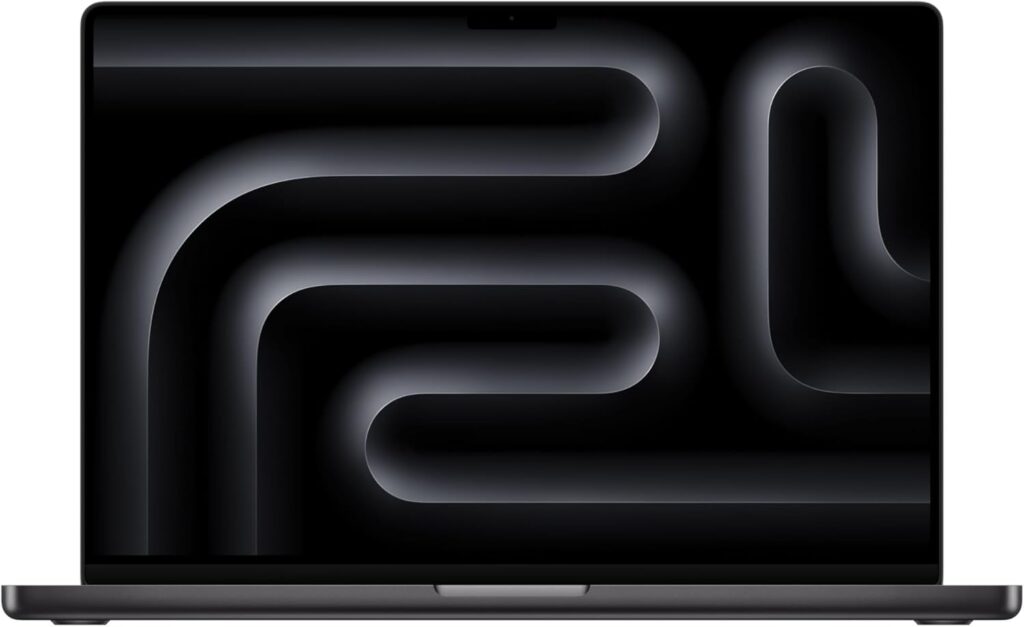
I’m including this because if I don’t, my inbox fills up with “but what about the MacBook?” So here’s the honest answer: the M5 Pro MacBook Pro is a phenomenal computer that is mostly wrong for LabVIEW.
Key specs:
- CPU: Apple M5 Pro, up to 18 cores, with the best single-core performance of anything on this list
- RAM: Unified memory up to 128 GB on M5 Max configurations
- Storage: Blazing SSDs, from 1 TB up
- Display: 14″ or 16″ Liquid Retina XDR, 120 Hz — arguably the best laptop screen made
- Ports: 3x Thunderbolt 5, HDMI, SD card — but no USB-A
- Weight: 1.6–2.1 kg depending on size
- Battery: In a different league from everything else here
The reality check: As covered earlier, there’s no commercial LabVIEW for macOS anymore, and NI’s hardware drivers don’t exist for Apple Silicon. Where this machine earns its spot is a narrow but real scenario: your LabVIEW work is algorithm development, simulation, or talking to networked instruments over TCP/IP (which needs no NI kernel drivers), and you run LabVIEW in a Windows virtual machine. In that world, the M5 Pro’s speed and all-day battery are legitimately wonderful.
But if you plug USB DAQ hardware into your laptop even occasionally, buy one of the four Windows machines above. Don’t fight your tools.
Pros:
- Best single-core speed and battery life here, by a wide margin
- Superb display and build quality
- Great for VM-based development and networked-instrument work
Cons:
- No native commercial LabVIEW; no Apple Silicon drivers for NI hardware
- A Windows VM adds cost, complexity, and fragility — especially for USB passthrough
- No USB-A, and Apple’s memory and storage pricing is its own special pain
A Word About FPGA Compiles (Plan Your Workflow, Not Just Your Laptop)
If LabVIEW FPGA is part of your life, the laptop is only half the equation. A few things worth knowing before you spend:
The cloud escape hatch is closing. For years, NI’s cloud compile service let people offload compiles from weaker machines. That service is being discontinued in late 2026, with NI pointing users toward local compilation or their compile farm toolkit. Translation: don’t buy an underpowered laptop today planning to lean on the cloud tomorrow.
Linux compiles faster. The compilation toolchain was originally built and optimized for Linux, and NI’s own documentation notes that a Linux compile worker can cut compile times substantially — figures in the range of 20 to 50 percent come up. If compiles dominate your week, setting up a dedicated Linux compile machine (even a cheap desktop) alongside your laptop is one of the best productivity investments you can make.
RAM, again. I know I’ve said it twice already. I’m saying it a third time because it’s the number one thing people under-buy: 32 GB minimum for FPGA work, 64 GB if your designs are large. Memory starvation doesn’t slow compiles down — it wrecks them.
Mistakes I See People Make (Learn From Others’ Pain)
After years around test benches and NI community forums, the same complaints come up over and over. None of them are about raw speed:
Buying hardware before checking driver compatibility. NI-DAQmx only supports a rolling window of recent LabVIEW versions. Brand-new DAQ hardware often demands the newest driver, and the newest driver may not support the older LabVIEW version your project is locked to. Check the DAQmx compatibility table before you buy hardware or commit to a LabVIEW version — this one bites people constantly.
Trusting Thunderbolt-to-PXI blindly. PCIe enumeration over Thunderbolt is not universally solid. If your workflow depends on it, verify with your exact chassis and laptop before purchase, not after.
Buying consumer or gaming laptops for lab duty. They benchmark great and then throttle, flake, or drown you in preinstalled software. There’s a reason working test engineers gravitate toward the business and workstation lines — cleaner Windows images, better firmware, and USB ports that stay solid through a twelve-hour run.
Under-buying RAM on soldered machines. If the memory can’t be upgraded, buy for the projects you’ll have in three years, not the ones you have today.
So Which One Should You Buy?
Let me make this easy:
- You want one machine that does it all, reliably, and travels well → the Lenovo ThinkPad P1 Gen 8 with a Core Ultra 9, 32 GB (upgrade later), 1 TB SSD. Add a good Thunderbolt dock for USB-A. This is my default answer for most people.
- You compile FPGA bitfiles locally, all day, and want the fastest possible machine → the Dell Pro Max 16 Plus with the 285HX and 64 GB. Fastest clocks, best ports, no compromises.
- You’re building a permanent benchtop rig with massive datasets → the HP ZBook Fury G1i 16, loaded with RAM and storage. It’ll outlast everything around it.
- You’re in the field, on a budget, or just tired of heavy laptops → the ASUS ProArt P16 with 64 GB (soldered — max it now, thank me later).
- You live in macOS and your LabVIEW work is purely remote or VM-based → the MacBook Pro M5 Pro works. Everyone else, pick a Windows machine.
And one final money-saving rule: if you never touch FPGA, vision, or machine learning toolkits, skip the big discrete GPUs entirely. LabVIEW itself won’t use them, and that’s a thousand dollars better spent on RAM, storage, or simply kept in your pocket.
Frequently Asked Questions
Does LabVIEW need a powerful GPU? No. Core LabVIEW, DAQ work, and FPGA compilation don’t use the GPU at all. A discrete GPU only matters if you also run vision processing, machine learning toolkits, or other GPU-accelerated software.
How much RAM do I really need for LabVIEW in 2026? 16 GB works for light development, but 32 GB is the realistic floor for serious work, and 64 GB is the comfortable choice for FPGA compilation or large data acquisition. If your in-memory datasets exceed roughly 16 GB, go straight to 64.
Can I run LabVIEW on a MacBook? Not commercially, and not with NI hardware. The last commercial macOS release was in 2023, and NI’s DAQ and GPIB drivers don’t support Apple Silicon. Your only path is a Windows virtual machine, which is fine for pure software work but unreliable for USB-connected instruments.
Is a gaming laptop okay for LabVIEW? It can run LabVIEW, sure. But test engineers consistently prefer business and workstation machines for good reasons: more stable firmware, cleaner Windows installs, more reliable USB ports, and better behavior with Thunderbolt-connected chassis. For hardware that babysits long test runs, boring beats flashy.
What matters most for FPGA compile times? Single-core CPU boost speed and plenty of RAM. The compilation toolchain is largely single-threaded, so a 5.5 GHz boost beats extra cores, and memory starvation is the fastest way to turn a one-hour compile into a disaster. A separate Linux compile machine is the power move if compiles rule your schedule.
Do I need Thunderbolt for LabVIEW? Only if you connect to a PXIe chassis or need high-bandwidth docking. For USB DAQ devices, native USB-A ports matter more — and if Thunderbolt-to-PXI is critical for you, test your exact hardware combination before buying.
Buying a LabVIEW laptop isn’t about chasing the biggest numbers on a spec sheet. It’s about matching the machine to the strange, specific way this software actually works: fast single cores, generous RAM, quick storage, and ports that hold a connection at 3 a.m. on day two of a test run. Get those right, and any of the five machines above will serve you well for years.
Now if you’ll excuse me, I have a compile to babysit.

Hi, my name is Burak. I am a mechanical engineer. I have been writing laptop reviews for the Engineering Laptops website since 2020. Please feel free to contact me if you have any questions.